
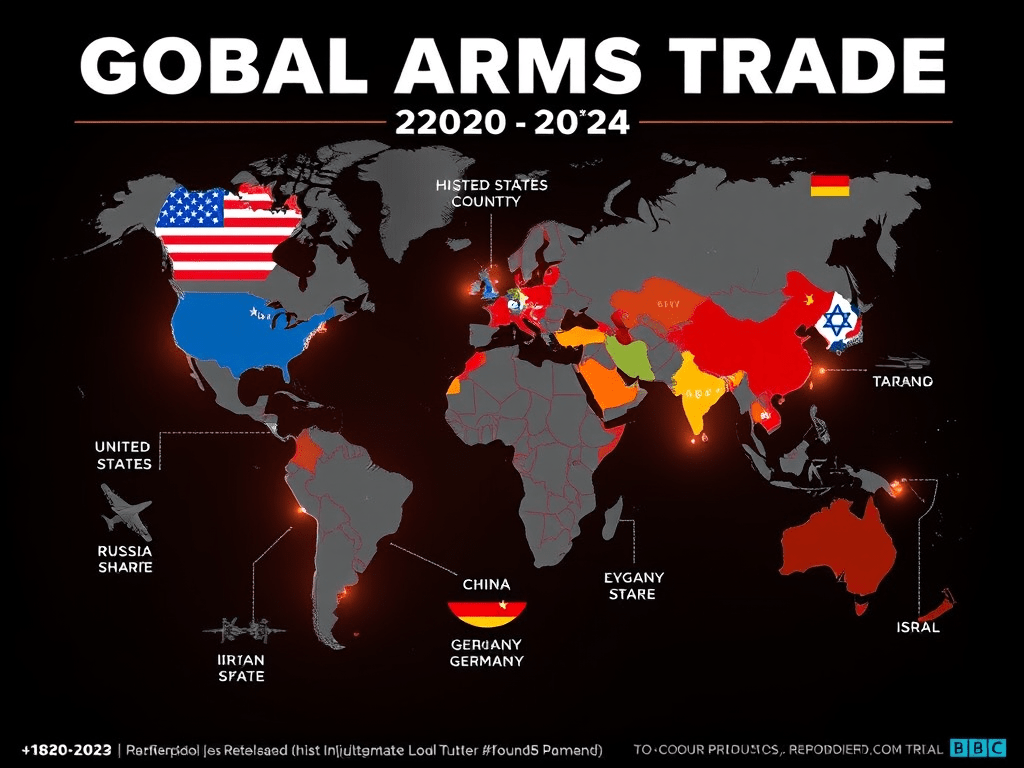
The global arms trade continues to play a pivotal role in shaping international security dynamics. From 2020 to 2024, the United States remained the dominant supplier, accounting for nearly half of global exports. France, Russia, China, and Germany followed, each with a distinct set of products and target markets.
While some countries like Russia have seen a decline due to sanctions and rising domestic demand, others such as South Korea and Israel are emerging as significant players with advanced defense technologies.
Top 10 Largest Arms Exporting Countries (2020–2024)
| Rank | Country | Share of Global Arms Exports (%) | Key Products & Markets |
|---|---|---|---|
| 1 | USA | 43% | Largest supplier globally; wide-ranging exports worldwide. |
| 2 | France | 9.6% | Expanding presence with diverse military systems. |
| 3 | Russia | 7.8% | Declining due to sanctions and increased domestic needs. |
| 4 | China | 5.9% | Growing influence in Asia, Africa, and the Middle East. |
| 5 | Germany | 5.6% | Focus on submarines, missile systems, and armored vehicles. |
| 6 | Italy | 4.8% | Naval, aircraft, and missile technologies. |
| 7 | United Kingdom | 3.6% | Fighter jets, naval systems, and cyber defense. |
| 8 | Israel | 3.1% | Advanced drones and missile defense systems. |
| 9 | Spain | 3.0% | Naval ships and military aircraft exports. |
| 10 | South Korea | 2.2% | Tanks, warships, and missile systems; rising global role. |
Key Export Products by Leading Nations
| Country | Key Export Products |
|---|---|
| United States | Fighter jets, missile systems, naval vessels, drones, armored land vehicles. |
| France | Aircraft, submarines, military vehicles, and missiles. |
| Russia | Tanks, combat aircraft, air defense systems, and small arms. |
| China | Drones, infantry weapons, artillery, and naval vessels. |
| Germany | Submarines, armored vehicles, missile technology, and small arms. |
| Italy | Naval vessels, military aircraft, and armored vehicles. |
| United Kingdom | Fighter jets, naval ships, and cyber warfare technology. |
| Israel | Drones, missile defense systems, and cybersecurity technology. |
| Spain | Naval ships, military aircraft, and land systems. |
| South Korea | Tanks, warships, and missile systems. |
Shifting Dynamics in Global Arms Trade
- U.S. Dominance: With 43% share, the U.S. remains unrivaled, supplying advanced air power, naval vessels, and integrated defense systems across multiple regions.
- France’s Rise: France’s growing share highlights its expanding presence in Africa, the Middle East, and Asia through diversified exports.
- Russia’s Decline: Sanctions, supply chain issues, and higher domestic consumption have reduced Russia’s global footprint.
- Emerging Exporters: South Korea and Israel are rapidly expanding influence with innovations in missile defense, drones, and naval technologies.
- Strategic Shifts: Demand is increasingly driven by geopolitical tensions, regional security concerns, and nations modernizing their military capabilities.
Outlook
The global arms trade remains highly concentrated, with the top five exporters accounting for more than 70% of the market. As geopolitical rivalries intensify, countries are diversifying their suppliers, giving space for new entrants like South Korea and Israel to challenge traditional exporters.
The next decade will likely witness further shifts, particularly as technology-driven systems such as cyber warfare tools, drones, and missile defense platforms gain strategic importance in global defense markets.



 Glottis Limited
Leave a comment