
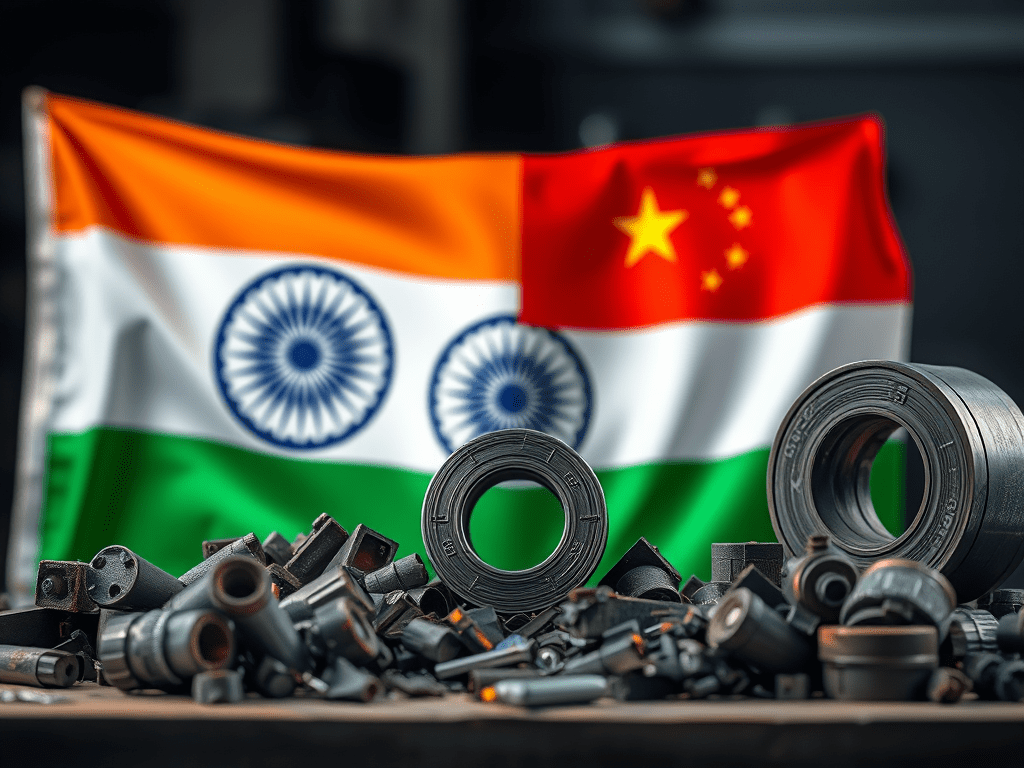
The Directorate General of Trade Remedies (DGTR) in India has proposed the imposition of a five-year anti-dumping duty on cold-rolled non-oriented electrical steel imported from China. The move comes after investigations revealed that Chinese firms were selling electrical steel in India at unfairly low prices, undermining the competitiveness of local producers.
The DGTR’s recommendation is part of India’s broader efforts to reduce dependency on Chinese imports and protect its domestic industries from unfair trade practices. India already faces a trade deficit of nearly USD 100 billion with China and has imposed anti-dumping duties on several products in recent years.
While the DGTR has suggested duties ranging between USD 223.82 and USD 414.92 per tonne, the final decision rests with the Finance Ministry of India. If approved, the measure could reshape the domestic electrical steel market, affecting manufacturers, downstream industries, and trade relations with China.
Key Data on Anti-Dumping Duty Recommendation
| Aspect | Details |
|---|---|
| Recommendation | Five-year anti-dumping duty on cold-rolled non-oriented electrical steel from China |
| Purpose | To protect Indian businesses from cheap imports being sold below market value |
| Findings | Chinese firms engaged in dumping practices by selling at unfairly low prices |
| Duties Recommended | Vary by company – USD 223.82 to USD 414.92 per tonne |
| Decision Authority | Finance Ministry of India (final approval) |
| Trade Context | India’s trade deficit with China ≈ USD 100 billion |
| WTO Compliance | Aligned with WTO rules; both India and China are members |
Expected Market Implications
- Increased Prices: Domestic producers may increase prices due to reduced low-cost competition.
- Protection for Local Producers: Indian firms likely to gain market share and expand production.
- Potential Supply Shortages: If local supply cannot meet demand, downstream industries may face disruptions.
- Impact on Imports: Import volumes from China expected to decline.
- Increased Local Investments: Domestic producers may boost investments in capacity expansion.
- Regulatory Scrutiny: Other industries may face similar anti-dumping probes.
- Rising Raw Material Costs: Companies dependent on electrical steel may see increased input costs.
- Long-Term Industry Health: Potential for a stronger domestic steel sector and more job creation.
- Trade Relations: Possible strain on India–China trade relations.
- Global Market Dynamics: Other countries may adjust trade strategies in response, shifting supply chains.
Conclusion:
The imposition of anti-dumping duties could strengthen India’s electrical steel industry by curbing unfair competition, but it may also increase costs for downstream industries and add strain to India–China trade relations. The long-term effectiveness will depend on how well Indian producers scale up to meet market demand while staying competitive.

 Glottis Limited
Leave a comment