
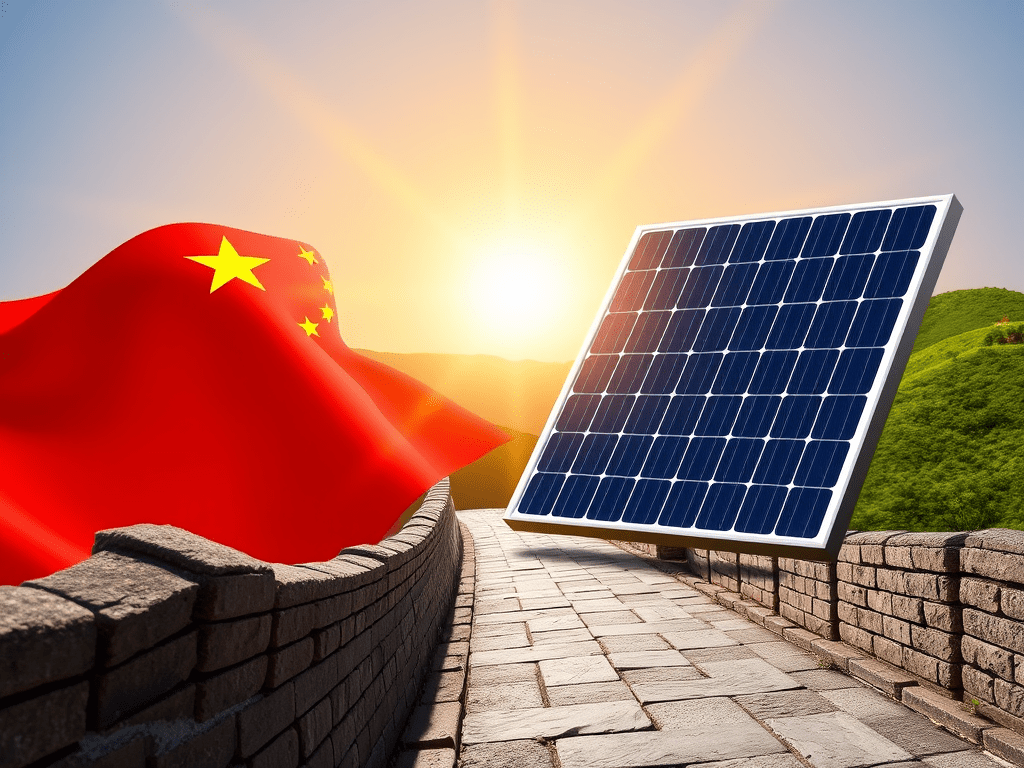
In a major move to safeguard the domestic solar manufacturing industry, the Directorate General of Trade Remedies (DGTR) has imposed a 30% antidumping duty on solar cell imports from China for three years. The decision follows a detailed investigation that highlighted severe injury caused to Indian producers by the sharp rise in low-cost imports from China.
Background of the Investigation
The probe was initiated in December 2024 after a joint application filed by Indian manufacturers including FS India Solar Ventures and Tata Power Solar. The investigation concluded that Chinese solar cells were being exported to India at unfairly low prices, resulting in significant financial distress for the domestic industry.
Key Findings of the DGTR
- Dumping Margin: The DGTR identified a dumping margin of 105–115%, showing that Chinese solar cells were sold far below fair market value.
- Import Surge: Imports of Chinese solar cells surged by 271% during the injury period and by an additional 63% in the subsequent period.
- Market Share: China dominated India’s solar cell imports with a 77% share during the investigation period.
- Domestic Industry Strain: Despite a 456% increase in domestic production, Indian manufacturers could only achieve a 112% rise in sales, largely because cheaper imports undercut local prices.
- Profit Decline: Indian solar producers faced a 275% drop in profits and a 158% decline in cash profits, forcing many to sell below cost.
Factors Behind the Duty Imposition
The DGTR identified several reasons necessitating protective duties:
- Severe Price Undercutting: Prices of Chinese solar cells fell by 55% in the post-injury period, making Indian products uncompetitive.
- Material Injury to Domestic Producers: The low-priced imports caused widespread financial distress in the local industry.
- High Import Dependence: With imports covering over three-fourths of demand, Indian manufacturers were pushed into losses despite production growth.
- Long-Term Sustainability: Without intervention, the domestic solar manufacturing sector risked collapse, affecting India’s renewable energy goals.
Key Data Summary
| Factor | Finding |
|---|---|
| Antidumping Duty | 30% on Chinese solar cell imports for 3 years |
| Dumping Margin | 105–115% |
| Import Surge | +271% (injury period), +63% (post-injury period) |
| Market Share of Imports (China) | 77% of total solar cell imports |
| Domestic Production Growth | +456% |
| Domestic Sales Growth | +112% |
| Price Undercutting | -55% (post-injury period) |
| Profit Decline | -275% profits, -158% cash profits |
| Major Petitioners | FS India Solar Ventures, Tata Power Solar |
| Future Probes | Dumping of solar encapsulants from South Korea, Thailand, Vietnam |
Broader Implications
This move marks a strategic step toward strengthening India’s solar manufacturing base under the “Make in India” initiative. It ensures a level playing field for domestic players against aggressive Chinese pricing. However, developers reliant on low-cost imports may face a temporary cost escalation in solar projects.
At the same time, DGTR’s parallel investigations into solar encapsulant imports from South Korea, Thailand, and Vietnam signal that India is broadening its trade defense strategy to protect critical components in the renewable energy supply chain.



 Glottis Limited
Leave a comment