
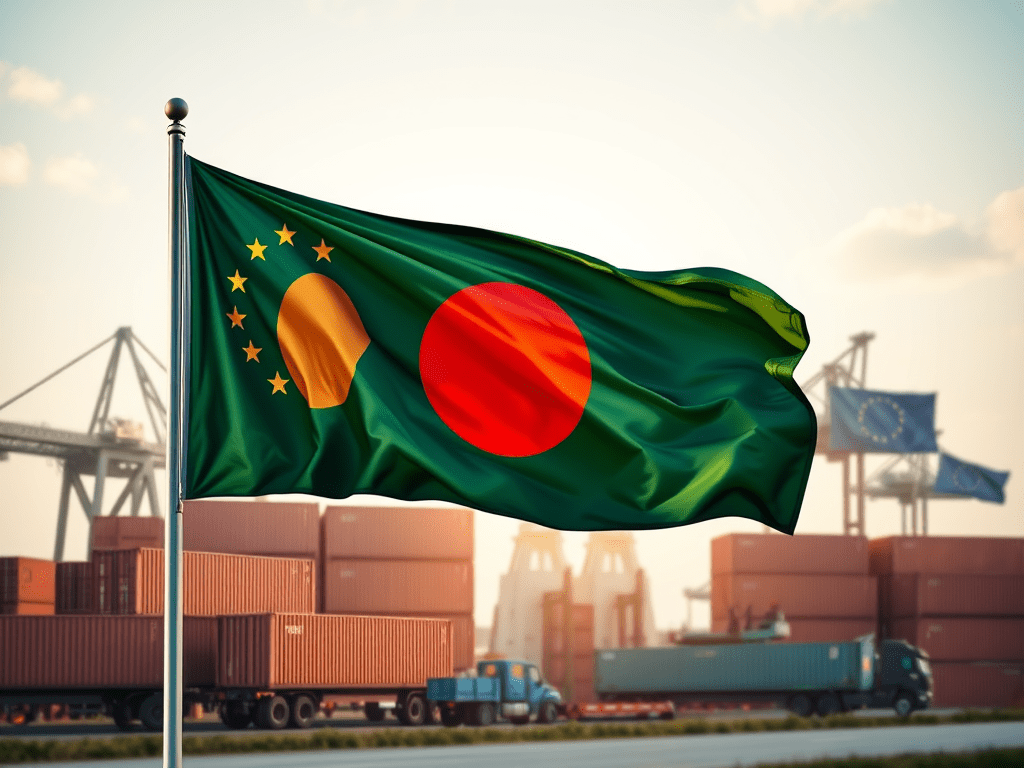
Bangladesh is preparing for a critical economic transition as it graduates from Least Developed Country (LDC) status to developing nation status in November 2026. This shift will have major implications for the country’s exports, particularly with its largest trading partner, the European Union (EU).
To mitigate potential trade disruptions, the Bangladeshi government is launching a feasibility study to identify priority areas for negotiating a Free Trade Agreement (FTA) with the EU, while also pursuing the GSP Plus preferential trade scheme.
Current Trade Status
At present, Bangladesh enjoys duty-free access to the EU, which imports over $25 billion worth of goods from the country annually—more than 60% of Bangladesh’s total shipments. This preferential treatment has been vital for the competitiveness of Bangladesh’s key export sector: garments.
However, after LDC graduation, Bangladesh risks losing this advantage, facing tariffs of up to 12% on exports to the EU, which could erode its market share.
Negotiation Options: GSP Plus vs. FTA
- GSP Plus: Offers continued duty-free access, but requires ratification of 32 international conventions on governance, human rights, labor, and environmental protection. Experts note that some conventions are difficult to meet due to stringent conditions. Additionally, Bangladesh’s garment exports may face disqualification under GSP Plus caps.
- FTA: Provides a broader framework with fewer conditions, allowing Bangladesh to negotiate trade terms directly. While more complex, an FTA may be a more sustainable solution than relying solely on GSP Plus.
Key Challenges
- Compliance Burden: Ratifying and implementing 32 conventions for GSP Plus qualification.
- Garment Sector Vulnerability: Caps and thresholds could limit benefits for Bangladesh’s largest export earner.
- Increased Competition: After graduation, Bangladesh will compete more directly with established developing countries with existing FTAs.
- Economic Vulnerability: Loss of preferential access could impact employment in export-driven industries.
Strategic Responses
Experts emphasize the need for intensive negotiations with the EU, alongside efforts to:
- Diversify export markets beyond the EU.
- Strengthen trade capacity and infrastructure.
- Invest in compliance mechanisms to meet global labor and environmental standards.
- Build resilience in key sectors like textiles and garments.
Key Data Summary
| Factor | Current/Projected Impact |
|---|---|
| LDC Graduation Date | November 2026 |
| Current EU Trade Status | Duty-free access under Everything But Arms (EBA) scheme |
| EU Imports from Bangladesh | $25+ billion (60% of exports) |
| Tariffs Post-Graduation | Up to 12% on key exports |
| GSP Plus Requirement | Ratification of 32 conventions |
| Garment Sector Concern | May not qualify for benefits due to caps/thresholds |
| FTA Option | Broader framework, fewer conditions than GSP Plus |
| Economic Risk | Loss of competitiveness, employment impact |
| Strategic Need | Market diversification, trade capacity building |
Conclusion
Bangladesh’s graduation from LDC status presents both risks and opportunities. While the loss of duty-free access threatens its export competitiveness, especially in garments, proactive engagement through FTA negotiations with the EU and compliance with global trade standards could secure a stronger, more sustainable trade future.



 Glottis Limited
Leave a comment