
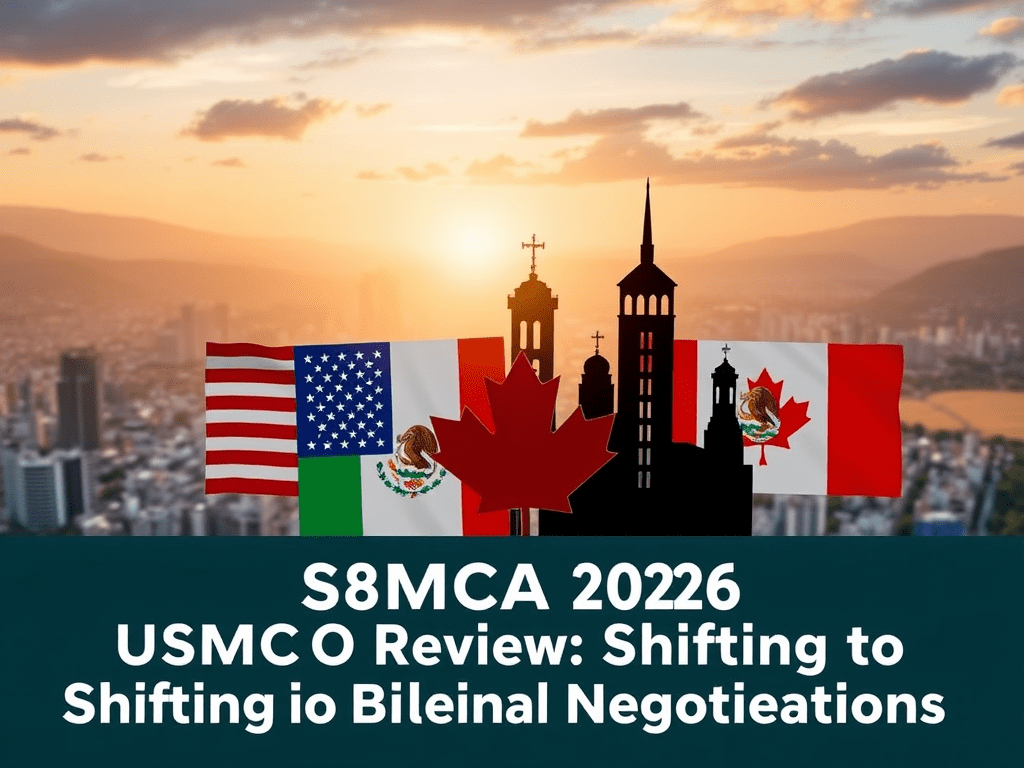
The U.S.-Mexico-Canada Agreement (USMCA), which replaced NAFTA in 2020, is set for its first major review in July 2026. Early signals suggest that the process may resemble a renegotiation more than a routine review, with an emphasis on bilateral negotiations rather than trilateral discussions.
Mexico’s Economy Minister Marcelo Ebrard and U.S. officials, including Jamieson Greer, have highlighted the likelihood of tailored, country-to-country talks. This marks a potential shift in approach from the spirit of NAFTA, which focused on a unified trilateral framework.
Key Highlights
- Bilateral Emphasis – The U.S. is leaning toward one-on-one negotiations with Mexico and Canada, potentially leading to disparities in trade terms.
- Historical Context – This review comes six years after NAFTA was replaced, echoing Donald Trump’s earlier push for bilateral deals.
- Trade Value – Trade among the three countries is worth nearly US $2 trillion annually, underscoring the stakes involved.
- Challenges & Concerns – Issues include Mexico’s delays in issuing USMCA-related regulations (notably in telecoms and energy), investor uncertainty, and the possibility of a broader renegotiation.
- Recent Engagements – Mexican President Claudia Sheinbaum and Canadian Prime Minister Mark Carney have already met to reinforce ties under the agreement.
Potential Impacts of the 2026 USMCA Review
| Focus Area | Impact / Outlook |
|---|---|
| Bilateral vs. Trilateral Talks | Customized deals may resolve specific frictions but risk creating uneven trade terms. |
| Addressing Trade Frictions | Could reduce tariffs/barriers on select goods, improving trade flows. |
| Sector-Specific Regulations | Telecom, energy, and finance may face uncertainty if Mexico delays regulations. |
| Renegotiation Risk | A full renegotiation could disrupt existing trade stability and create uncertainty. |
| Trade Balances | U.S. pressure to reduce deficits may alter Mexico/Canada export strategies. |
| Investor Confidence | Regulatory instability may reduce investment flows, especially into Mexico. |
| Regional Supply Chains | Existing cross-border supply chains could be disrupted by changing trade terms. |
| Long-term Relationships | Bilateralism may strengthen ties individually but weaken overall trilateral unity. |
| Political & Public Sentiment | U.S. domestic politics could push more protectionist measures, reshaping trade. |
Conclusion
The 2026 USMCA review represents both a challenge and an opportunity. While bilateral negotiations may resolve targeted disputes, they also risk fragmenting the unified framework that has underpinned North American trade for decades. With $2 trillion in trade at stake, the outcomes will have far-reaching implications for supply chains, investor confidence, and the global competitiveness of the region.
North America’s economic future will depend on whether leaders choose cooperation and integration—or drift toward fragmented, protectionist approaches.




 Glottis Limited
Leave a comment