

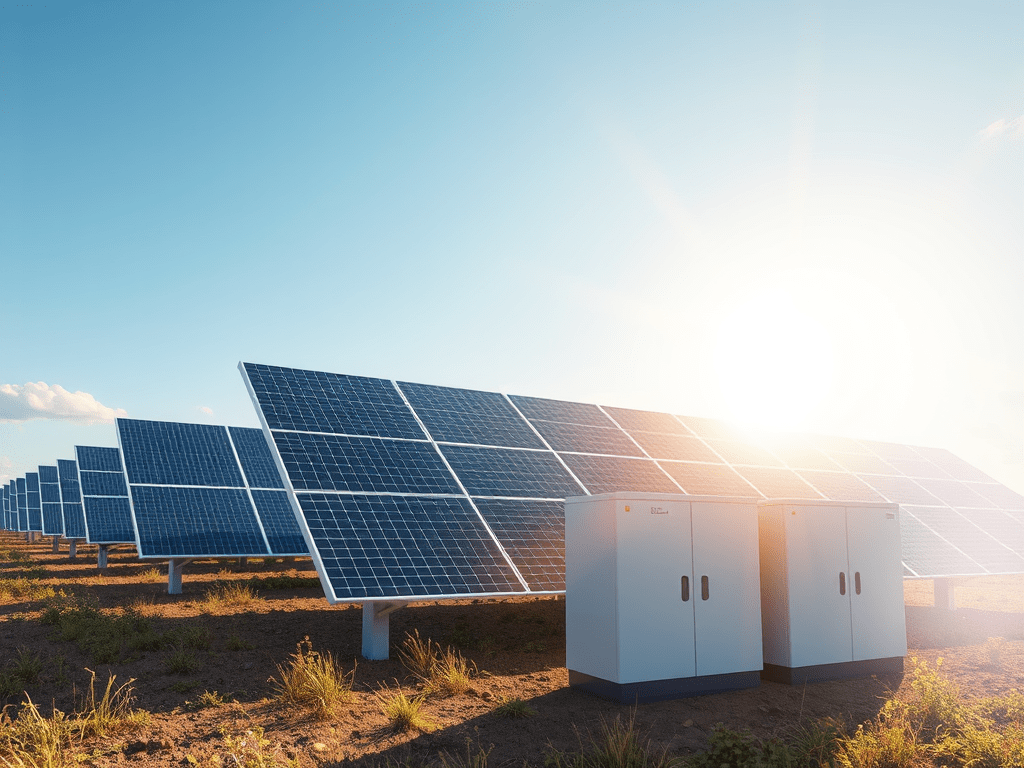
In a significant step toward strengthening India’s renewable energy infrastructure, the Ministry of New and Renewable Energy (MNRE) has approved the establishment of a 2000 MWh Battery Energy Storage System (BESS) in Rajasthan. This initiative marks another milestone in India’s ongoing transition toward sustainable, round-the-clock solar power utilization.
Enhancing Solar Power Reliability
The upcoming 2000 MWh BESS project is designed to stabilize Rajasthan’s power supply by storing excess solar energy generated during the day and redistributing it during peak demand hours in the morning and evening. This will reduce the need for costlier power purchases from exchange markets and provide consumers with more affordable, reliable energy.
The approved system features a four-hour battery cycle, a design optimized for regions like Rajasthan that benefit from high solar irradiance but face intermittent supply challenges after sunset.
Complementing Existing Storage Infrastructure
This project complements two existing battery storage projects in Rajasthan, together contributing an additional 4000 MWh of capacity under development. Once completed, the state’s total storage capacity will reach 6000 MWh, positioning it as a leader in renewable energy storage within India.
The state’s Energy Department is also developing an advanced energy management system to map solar generation and consumption patterns, ensuring the most efficient use of stored energy.
Exploring Advanced Battery Technologies
While MNRE has not yet confirmed the specific technology for this 2000 MWh BESS, multiple options are under evaluation based on cost, lifecycle, and performance parameters. Globally, large-scale BESS installations typically employ one or a combination of the following technologies:
- Lithium-Ion Batteries – High efficiency, long lifespan, and declining costs make them the most common choice for large-scale solar integration.
- Flow Batteries – Ideal for extended discharge durations and large-capacity scalability.
- Sodium-Sulfur Batteries – Suitable for grid-level applications with high energy retention and stability.
- Lead-Acid Batteries – A traditional option, though less favored today due to lower energy density.
- Battery Management Systems (BMS) – Critical for performance optimization and real-time monitoring of battery health.
Driving the Future of Renewable Energy
The establishment of this project completes Rajasthan’s initial 6000 MWh BESS target, but further expansions are anticipated as India continues to push for energy security and grid modernization. The integration of advanced battery technologies will not only stabilize renewable power but also accelerate India’s path to a low-carbon economy.
Key Data Summary
| Category | Details | Impact/Significance |
|---|---|---|
| Project Capacity | 2000 MWh Battery Energy Storage System (BESS) | Enhances renewable energy reliability and grid stability. |
| Approval Authority | Ministry of New and Renewable Energy (MNRE) | Officially approved with a four-hour battery cycle. |
| Location | Rajasthan, India | High solar potential region ideal for storage applications. |
| Objective | Store excess solar power for use during peak hours | Reduces dependence on costlier exchange power. |
| Existing Projects | Two ongoing projects totaling 4000 MWh | Brings total planned capacity to 6000 MWh. |
| Battery Cycle | 4 hours | Optimized for solar generation-consumption balance. |
| Potential Technologies | Lithium-Ion, Flow, Sodium-Sulfur, Lead-Acid | Technology choice to depend on cost, efficiency, and lifecycle. |
| Management Systems | Advanced BMS and energy mapping tools | Ensure optimal energy utilization and battery health. |
| Future Expansion | Additional storage to be explored post 6000 MWh completion | Indicates long-term renewable growth strategy. |
| Key Benefit | Cheaper, stable, and sustainable power supply | Supports India’s renewable energy transition goals. |
Conclusion
Rajasthan’s 2000 MWh BESS project is a cornerstone in India’s renewable transformation, bridging the gap between intermittent solar generation and continuous power demand. By investing in robust storage infrastructure, India is setting a global example in integrating clean energy with modern grid management, paving the way for a more resilient and sustainable power future.

 Glottis Limited
Leave a comment