
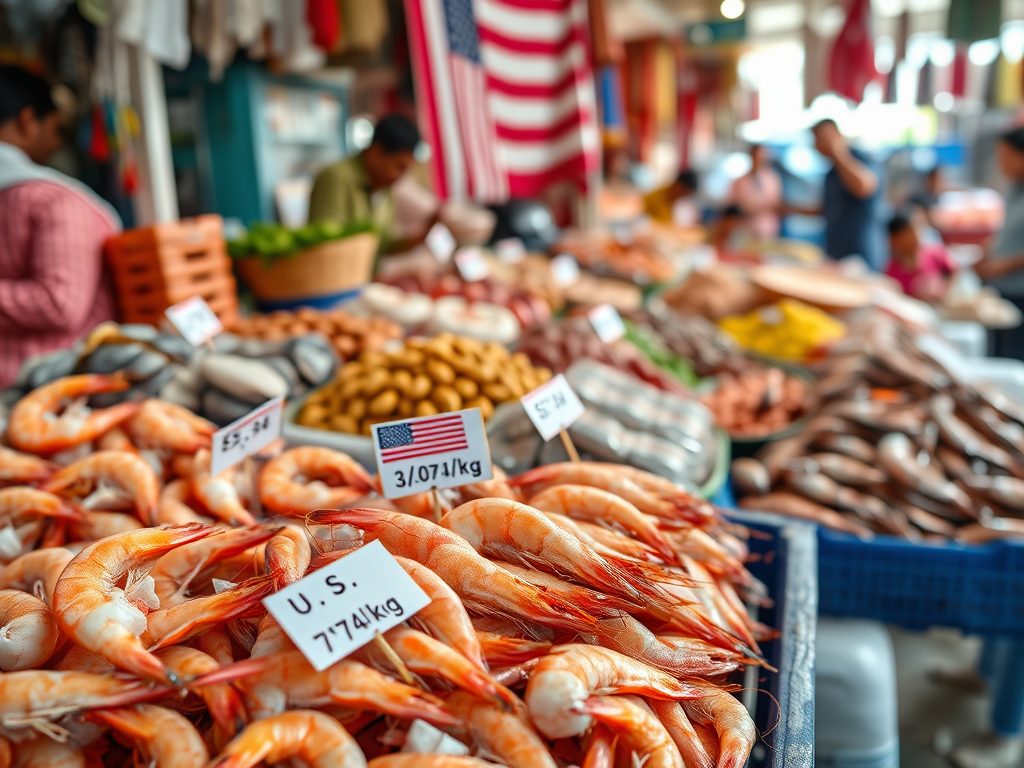
India’s seafood export industry, one of the nation’s largest agricultural export segments, is facing turbulent waters following the U.S. imposition of a 59.73% tariff on Indian seafood. The move has severely disrupted trade dynamics, as the United States was India’s largest seafood market, accounting for 35% of exports valued at $7.38 billion.
With the U.S. now less accessible due to prohibitive tariffs, Indian exporters are urgently diversifying towards Asian markets such as China and Japan, though these alternatives currently fail to match the premium prices once fetched in the American market.
Shifting Tides in India’s Seafood Export Landscape
India’s seafood exports remain robust in terms of volume, but the value realization has sharply declined due to regional price disparities. The U.S. market commanded an average price of $7.74 per kg, whereas China and Japan offer significantly lower returns at $3.07/kg and $3.70/kg, respectively.
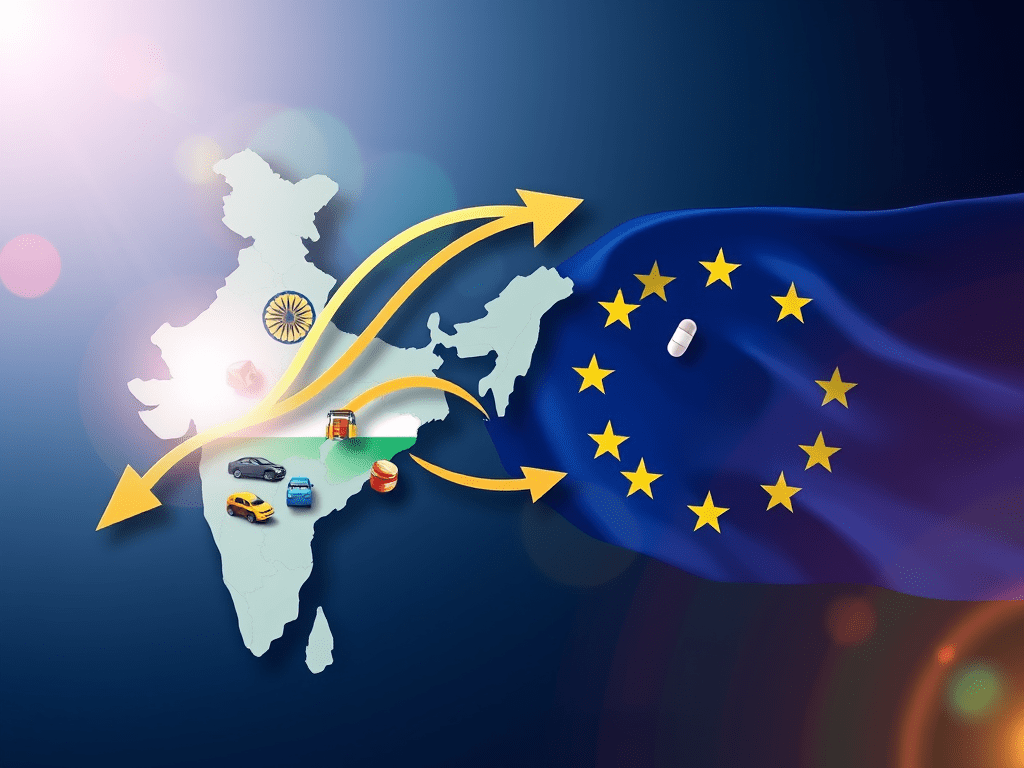
Meanwhile, India’s presence in the European Union (EU) — once a key market — has declined dramatically, falling from 35% to 11% over the last decade. Despite this drop, the EU continues to offer mid-range pricing around $5.41/kg, making it a strategic focus area for recovery.
India’s Seafood Export Performance (2023–24)
| Destination | Quantity Exported (in lakh tonnes) | Average Price (per kg) | Observations |
|---|---|---|---|
| United States | 3.29 | $7.74 | High-value market affected by 59.73% tariff. |
| China | 4.52 | $3.07 | High volume, but low margins due to smaller shrimp sizes. |
| Japan | 1.07 | $3.70 | Stable demand, limited by price sensitivity. |
| European Union (average) | Varies | ~$5.41 (Belgium: $6.09, Italy: $5.12) | Declining share but premium potential remains. |
Key Industry Insights
- Tariff Shock and Realignment
The steep U.S. tariff has reshaped India’s seafood export map, forcing exporters to depend on lower-priced Asian markets while losing access to their most lucrative customer base. - Need for Trade Agreements
The Andhra Pradesh government, representing one of India’s largest seafood-producing states, is advocating for early Free Trade Agreements (FTAs) with the EU to mitigate tariff impacts and rebuild market share. - Quality vs. Quantity Dynamics
Market preferences differ significantly — the U.S. prefers large shrimp, commanding premium prices, whereas China imports smaller, whole shrimp in bulk, prioritizing volume over quality. - Certifications for Value Enhancement
To regain premium positioning, India is pursuing Marine Stewardship Council (MSC) certification, which could raise export prices by up to 30% by validating sustainable fishing practices and traceability. - Long-Term Strategic Shift
While the short-term transition may be challenging, India’s efforts to upgrade processing standards, diversify markets, and enhance sustainability credentials could secure its long-term resilience in the global seafood trade.
The Global Perspective
The U.S. tariff has not only disrupted India’s seafood trade but also altered global supply chains, affecting shrimp prices and demand patterns across Asia and Europe. While India remains the world’s largest shrimp exporter, its profitability now hinges on accessing premium markets and improving brand positioning through sustainability and quality assurance.
Conclusion
India’s seafood sector stands at a crossroads — caught between volume growth and value erosion. The U.S. tariff setback underscores the urgent need for trade diversification, quality certification, and policy interventions to sustain the industry’s export momentum.
With strategic action, India can re-emerge as a dominant player, balancing its global seafood footprint across high-value and high-volume markets.


 Glottis Limited
Leave a comment