
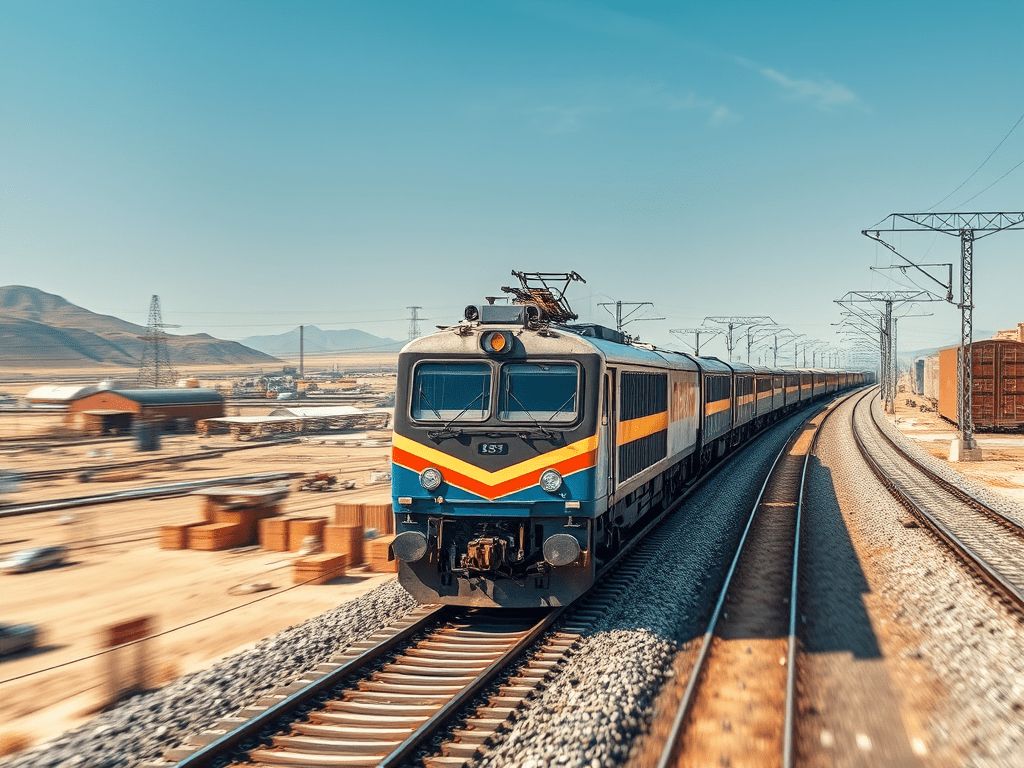
India’s rail freight sector has reached a historic milestone, positioning the country as the world’s second-largest rail freight carrier. With 1,600 million metric tonnes of freight transported during the financial year 2024–25, India has overtaken both the United States and Russia, standing just behind China.
This achievement highlights India’s ongoing transformation in freight logistics, powered primarily by the Dedicated Freight Corridors (DFCs) — specialized rail lines built exclusively for goods movement.
Global Rail Freight Rankings (FY 2024–25)
| Country | Freight Transported (Million Metric Tonnes) | Rank |
|---|---|---|
| China | 4,000 | 1 |
| India | 1,600 | 2 |
| United States | 1,500 | 3 |
| Russia | 1,100 | 4 |
Key Drivers of India’s Rail Freight Success
1. Dedicated Freight Corridors (DFCs)
The Western and Eastern Dedicated Freight Corridors have revolutionized India’s freight network, handling 300–325 freight trains daily. Over 96% of the DFC network, spanning 2,800+ kilometers, is now operational, providing a robust backbone for national logistics.
2. Speed and Efficiency
Freight trains on DFCs operate at 50–60 km/h, compared to 20–25 km/h on conventional lines. This increase in speed has drastically reduced transit times and improved delivery predictability.
3. Infrastructure Expansion
Modernization initiatives have enhanced India’s rail infrastructure, improving connectivity between industrial hubs and ports. The integration of electrified broad-gauge tracks ensures energy efficiency and reliability.
4. Freight Volume Growth
India’s rail freight volumes have steadily increased over recent years, demonstrating consistent growth and efficiency improvements.
| Year | Freight Volume (Million Tonnes) |
|---|---|
| 2019–20 | 1,221 |
| 2020–21 | 1,231 |
| 2021–22 | 1,418 |
| 2022–23 | 1,512 |
| 2023–24 | 1,578 |
| 2024–25 (Est.) | 1,617 |
5. Market Shift from Road to Rail
The efficiency and cost-effectiveness of the DFC network have encouraged a modal shift back from road to rail. This has helped India regain a significant share of the domestic logistics market, reducing dependency on roadways.
6. Economic and Environmental Impact
By optimizing logistics for both industrial and rural regions, DFCs have reduced transport costs and boosted trade. Moreover, the shift to rail has led to lower carbon emissions, supporting India’s sustainability goals.
Dedicated Freight Corridors (DFCs): Overview
| Corridor | Route | Length (km) | Key Impact |
|---|---|---|---|
| Western DFC | JNPT (Mumbai) – Dadri (UP) | ~1,504 | Connects ports to industrial hubs; improves container movement. |
| Eastern DFC | Ludhiana (Punjab) – Sonnagar (Bihar) | ~1,337 | Enhances coal, cement, and agricultural freight efficiency. |
Core Features of DFCs:
- Exclusive freight use — no interference from passenger services.
- Electrified broad-gauge double lines for high capacity.
- Daily handling capacity of 300+ freight trains.
- Advanced signaling and automated controls.
Key Benefits of DFC Implementation
| Benefit | Description |
|---|---|
| Reduced Transit Time | Faster average speeds and direct routes minimize delays. |
| Higher Reliability | Dedicated corridors ensure consistent freight schedules. |
| Lower Emissions | Shift from road to rail reduces CO₂ output. |
| Cost Efficiency | Lower logistics costs for industries and traders. |
| Regional Growth | Improved access for underdeveloped regions and industrial belts. |
Conclusion
India’s rise as the world’s second-largest rail freight carrier marks a turning point in the nation’s logistics narrative. The Dedicated Freight Corridors have not only accelerated the flow of goods but have also strengthened India’s position in the global supply chain. With near-total completion of the DFC network, India is well on its way to achieving a smarter, faster, and greener freight ecosystem — one that underpins the country’s vision of becoming a global logistics powerhouse.



 Glottis Limited
Leave a comment