

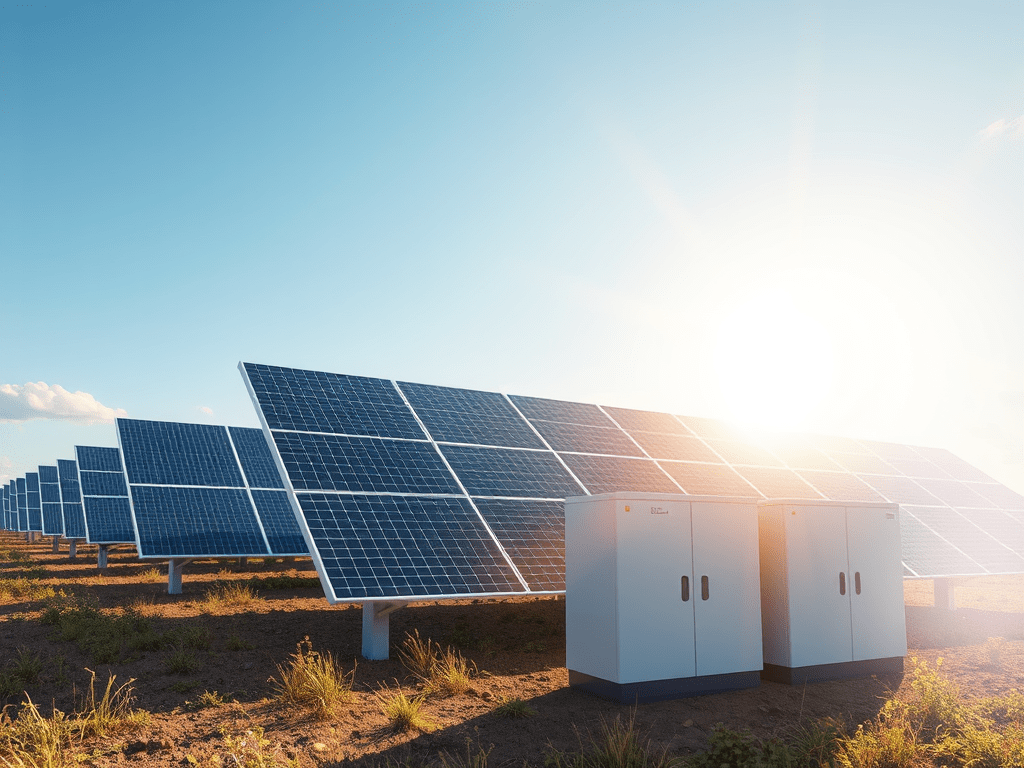
As renewable energy scales globally, the challenge is no longer generation alone — it is stability, reliability, and dispatchability. This is where Battery Energy Storage System (BESS) containers emerge as a critical enabler of the energy transition.
A BESS container is a modular, factory-built battery energy storage system, packaged inside a 20-foot or 40-foot ISO container, designed to store and dispatch electricity for grid, commercial, and industrial applications. These containerized systems are fast becoming the backbone of modern power systems by enabling higher penetration of solar and wind energy.
What Exactly Is a BESS Container?
A containerized BESS integrates all major subsystems into a single, transportable enclosure:
- Battery modules (typically lithium-ion or LFP)
- Power Conversion System (PCS / inverters)
- Thermal management systems (HVAC)
- Fire detection and suppression
- Energy Management System (EMS) and controls
Built on standard shipping container dimensions, BESS containers are engineered for ease of transport, stacking, and rapid deployment, even in harsh outdoor environments. They are manufactured to meet stringent IP/NEMA ratings and global safety certifications such as UL, IEC, and NFPA, making them suitable for utility-scale and C&I projects alike.
Why BESS Containers Matter for Renewables
Renewable energy sources like solar and wind are inherently intermittent. BESS containers address this limitation by:
- Storing excess generation during high solar or wind output
- Releasing power during low-generation or peak-demand periods
- Stabilizing grid frequency and voltage
- Reducing renewable curtailment
- Deferring costly grid upgrades
They also enable high-value applications such as peak shaving, energy arbitrage, black-start capability, and backup power for critical infrastructure.
The Next-Level Role in the Energy Transition
The importance of BESS containers is reflected in market growth projections. Globally, the BESS market is expected to roughly double by 2030, driven by renewable integration, electrification, and grid modernization.
Global & India BESS Market Outlook
| Region | Market Size (2024–25) | Projected Market (2030) | Growth Drivers |
|---|---|---|---|
| Global | USD 50–77 Billion | USD 106–172 Billion | Renewable integration, grid modernization |
| Asia-Pacific | Rapidly expanding | One of the fastest-growing regions | Solar & wind scale-up |
| India | ~USD 250 Million (2024) | ~USD 1.2 Billion | Storage-linked tenders, renewable targets |
With aggressive solar and wind targets, India is emerging as a key growth market, making containerized BESS a strategic asset for utilities, developers, and industrial users.
How Containerized BESS Will Evolve
1. Technical Evolution
Advancements are expected across multiple fronts:
- Higher-energy-density battery chemistries (LFP, advanced Li-ion, next-gen technologies)
- Smarter EMS and digital controls
- Improved thermal and fire-safety designs
- Higher kWh capacity per container
- Lower Levelized Cost of Energy (LCOE)
2. Deployment Model Shift
“Plug-and-play” containerized BESS — pre-assembled and pre-tested at the factory — will become the standard. This approach significantly:
- Reduces EPC timelines
- Minimizes civil works
- Simplifies permitting and commissioning
- Lowers project execution risk
Strategic Implications for Logistics-Minded Stakeholders
As BESS systems become more modular and standardized, logistics and operations planning will play a defining role in project success.
Logistics & Lifecycle Impact Areas
| Stage | Emerging Requirements |
|---|---|
| Factory to Site | Optimized transport, route surveys, safe handling |
| Project Deployment | Precision delivery, synchronized site logistics |
| Operations & Maintenance | Spares movement, container relocation |
| Lifecycle Services | Repowering, upgrades, end-of-life battery handling |
| Compliance | Hazardous goods regulations, recycling norms |
Lifecycle services — including relocation, repowering, and compliant end-of-life battery handling — will create new opportunities at the intersection of renewable energy, supply-chain management, and regulatory compliance.
Conclusion
BESS containers are no longer a supporting technology — they are becoming a core infrastructure asset of the global energy system. As renewable penetration increases, the success of energy transition projects will depend not just on battery technology, but on how efficiently these systems are planned, transported, deployed, and managed across their lifecycle.
For project developers, utilities, and logistics-driven organizations alike, containerized BESS represents both a technical solution and a strategic opportunity in the decade ahead.

 Glottis Limited
Leave a comment