
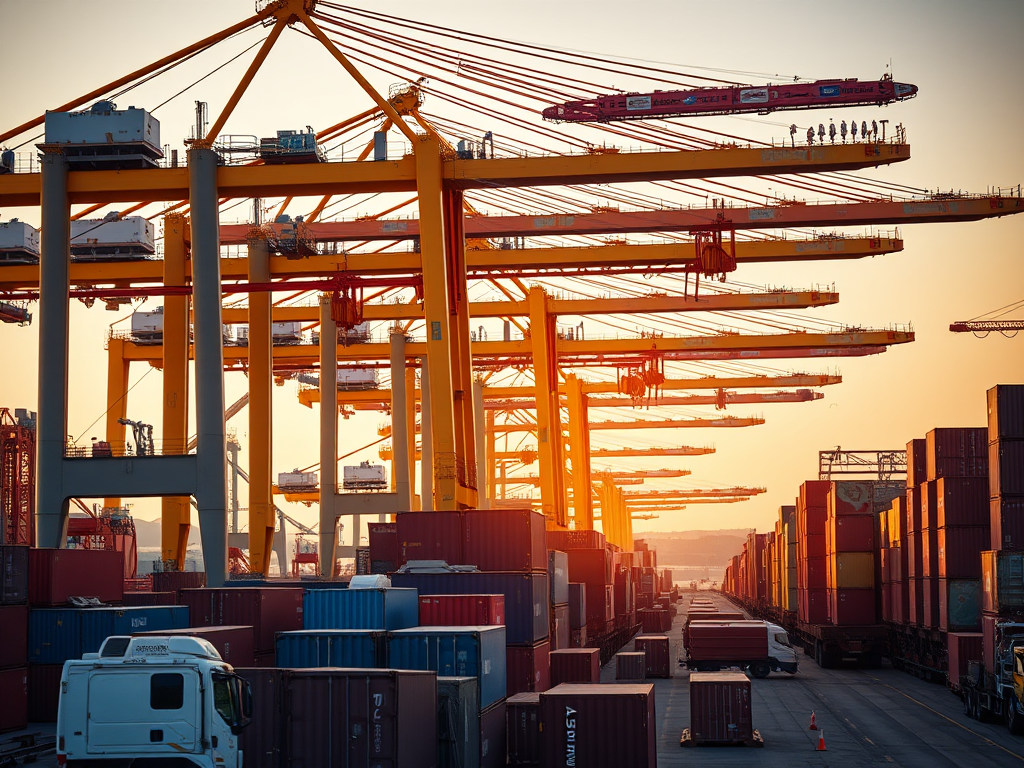
The United States has recently implemented new tariffs and port fees that are poised to reshape trade costs and logistics operations across the maritime and freight forwarding sectors. The move targets Chinese-made machinery and port equipment, with tariff rates reaching unprecedented levels. Industry experts warn that the combined impact of these measures may lead to higher import costs, constrained port operations, and weakened export competitiveness.
Key Developments
- New Tariffs on Chinese Equipment
The U.S. government has introduced additional tariffs on selected Chinese-made machinery, with rates climbing as high as 270%. This includes critical port-handling equipment such as rubber tire gantry cranes, rail-mounted gantry cranes, and other cargo-handling machinery essential for port operations. - Introduction of Port Fees
In addition to tariffs, new port fees are being imposed on Chinese-made freight vessels. These fees, effective from October 14, will increase the overall cost structure for importers. - Deferred Payments Offer Limited Relief
While payments for the new tariffs can be deferred until December 10, industry stakeholders see this as temporary relief that does not offset the long-term financial impact. - Rising Equipment Costs and Financing Challenges
The higher tariffs have made it difficult for port operators to procure modern machinery. Financing large-scale upgrades or replacements has become more expensive, potentially slowing port modernization and reducing operational efficiency. - Competitiveness and Market Pressure
Increased import costs are likely to make U.S. exports less competitive globally. Domestic manufacturers may struggle to absorb these costs, and passing them on to consumers could reduce demand for U.S. goods. - Economic and Trade Flow Impacts
Recent data suggests a decline in containerized shipping volumes to and from the U.S., even as global container volumes increase. This indicates a potential shift in trade routes and sourcing strategies. - China’s Countermeasures and Ongoing Negotiations
In response, China has announced counter-tariffs, escalating trade tensions. However, communications between both governments continue, with upcoming high-level discussions anticipated to explore potential resolutions. - Research Insights
Maritime economic studies suggest that reducing trade barriers could enhance GDP by up to 3.4% in various economies, emphasizing the long-term benefits of cooperation over confrontation.
Summary of Impacts
| Impact Area | Details |
|---|---|
| Tariff Rates | Tariffs up to 270% on Chinese-made port machinery and equipment. |
| Equipment Costs | Significant price hikes for port cranes and cargo-handling systems. |
| Port Fees | New fees based on vessel capacity, increasing importer expenses. |
| Competitiveness | U.S. exports may lose market share due to higher input costs. |
| Deferred Payments | Temporary relief until December 10, but long-term cost burden remains. |
| Economic Impact | Decline in containerized shipping volumes and altered trade dynamics. |
| Industry Response | Port authorities express concern over financing and sourcing challenges. |
| Global Reactions | China imposes counter-tariffs; diplomatic talks remain ongoing. |
Conclusion
The combination of steep tariffs and newly structured port fees represents a significant inflection point in U.S.–China trade relations. While intended to strengthen domestic manufacturing and reduce dependency on foreign machinery, the immediate effect may be rising costs for importers and exporters alike.
The resulting pressures on supply chains, port operations, and market competitiveness could have lasting implications—potentially realigning global trade flows in the months ahead.





 Glottis Limited
Leave a comment