
Introduction
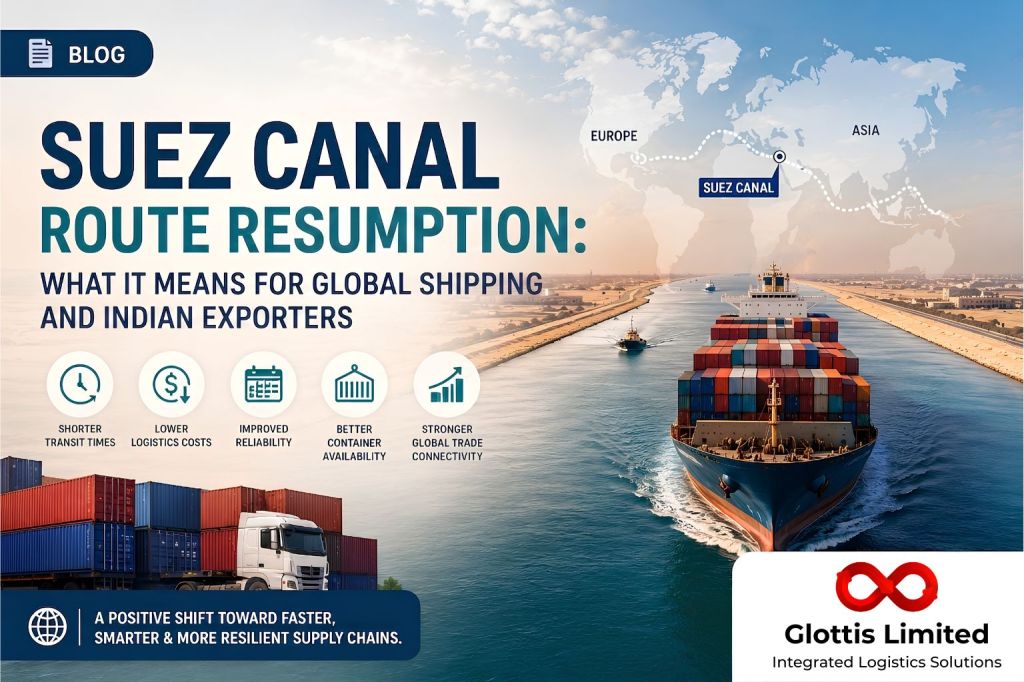
The global logistics industry is witnessing one of its most significant developments in recent years. After nearly two years of disruptions, major shipping lines Maersk and Hapag-Lloyd have begun rerouting selected container services through the Suez Canal once again, marking the first step toward restoring one of the world’s busiest maritime trade corridors.
For importers, exporters, and supply chain professionals, this development could lead to shorter transit times, improved schedule reliability, and reduced transportation costs. While the return is currently limited to selected services, it signals a positive shift for global trade and supply chain planning.
Why the Suez Canal Matters
The Suez Canal is one of the world’s most important shipping routes, connecting Asia and Europe through the Red Sea and the Mediterranean Sea.
Before the Red Sea disruptions, approximately 10% of global seaborne trade moved through this corridor, making it the fastest maritime route between Asia and Europe.
For businesses, this route offers:
- Faster cargo movement between Asia and Europe
- Lower fuel consumption compared to longer alternative routes
- Reduced transportation costs
- Better inventory planning
- Improved delivery schedules
When the route became unsafe, shipping companies diverted vessels around the Cape of Good Hope in South Africa. Although this ensured cargo movement, it significantly increased voyage distances, transit times, fuel consumption, and operating expenses.
Why Shipping Lines Are Returning
Following continuous assessments of the security situation in the Red Sea, Maersk and Hapag-Lloyd have announced that their AE15/SE3 service under the Gemini Cooperation network will now return to the Suez Canal route.
This decision follows improved operational assessments while maintaining a cautious approach. The companies have clarified that crew safety, vessel security, and cargo protection remain their highest priorities. Additional services may return in the future depending on regional stability.
What This Means for Global Supply Chains
1. Shorter Transit Times
One of the biggest advantages is a significant reduction in sailing time.
Compared to routing around the Cape of Good Hope, the Suez Canal route can reduce transit times by up to four weeks for certain Asia–Europe services. Faster transit enables businesses to replenish inventory more quickly and improve customer delivery performance.
2. Lower Logistics Costs
Shorter voyages require less fuel, fewer sailing days, and lower operating expenses.
As more services gradually return to the Suez Canal, shipping costs may begin to normalize, offering long-term savings for exporters and importers. However, the pace of any freight rate changes will depend on market demand, vessel capacity, and geopolitical developments.
3. Improved Schedule Reliability
Longer diversions around Africa disrupted sailing schedules, equipment availability, and supply chain planning.
The reopening of selected Suez Canal services is expected to improve schedule consistency, helping businesses plan production, procurement, and inventory more efficiently.
4. Better Container Availability
Faster vessel turnaround means containers return to origin ports more quickly. Over time, this can improve equipment availability and reduce some of the supply chain bottlenecks experienced during recent disruptions.
What Does This Mean for Indian Importers and Exporters?
India plays a vital role in global trade, with significant cargo movements to Europe, the Mediterranean, and the Middle East.
A gradual return to the Suez Canal can benefit Indian businesses by:
- Reducing transit times for Europe-bound shipments
- Improving export competitiveness
- Supporting better inventory management
- Enhancing supply chain predictability
- Potentially lowering overall shipping costs over time
Businesses dealing with engineering goods, textiles, pharmaceuticals, automotive components, chemicals, and consumer products could particularly benefit from more efficient shipping schedules.
Is the Situation Fully Back to Normal?
Not yet.
The current reopening applies only to selected services, and shipping companies continue to monitor developments in the Red Sea closely.
Carriers have stated that future routing decisions will depend on regional security conditions, and contingency plans remain in place should circumstances change.
For businesses, this means staying informed and maintaining flexibility in supply chain planning remains essential.
How Businesses Should Prepare
Rather than assuming a complete return to pre-disruption operations, companies should:
- Monitor shipping schedules regularly.
- Stay updated on freight market developments.
- Plan inventory with flexible lead times.
- Work with experienced logistics partners who can adapt quickly to changing trade conditions.
- Review routing options based on cost, transit time, and service reliability.
How Glottis Limited Supports Your Global Supply Chain
At Glottis Limited, we continuously monitor global shipping developments to help our customers make informed logistics decisions.
Whether your cargo moves by sea, air, or multimodal transportation, our team provides reliable freight forwarding, customs clearance, project logistics, warehousing, and end-to-end supply chain solutions tailored to your business needs.
As global trade conditions evolve, we remain committed to delivering efficient, transparent, and dependable logistics services that keep your cargo moving.
Conclusion
The gradual return of container services through the Suez Canal is an encouraging milestone for the logistics industry. While a full restoration of normal shipping patterns will take time, this development signals improving efficiency across one of the world’s most important trade corridors.
For businesses engaged in international trade, the reopening presents opportunities to benefit from shorter transit times, improved reliability, and greater supply chain resilience. By staying informed and partnering with experienced logistics providers, companies can navigate these changes with confidence and maintain a competitive edge in global markets.



Leave a comment