
Overview
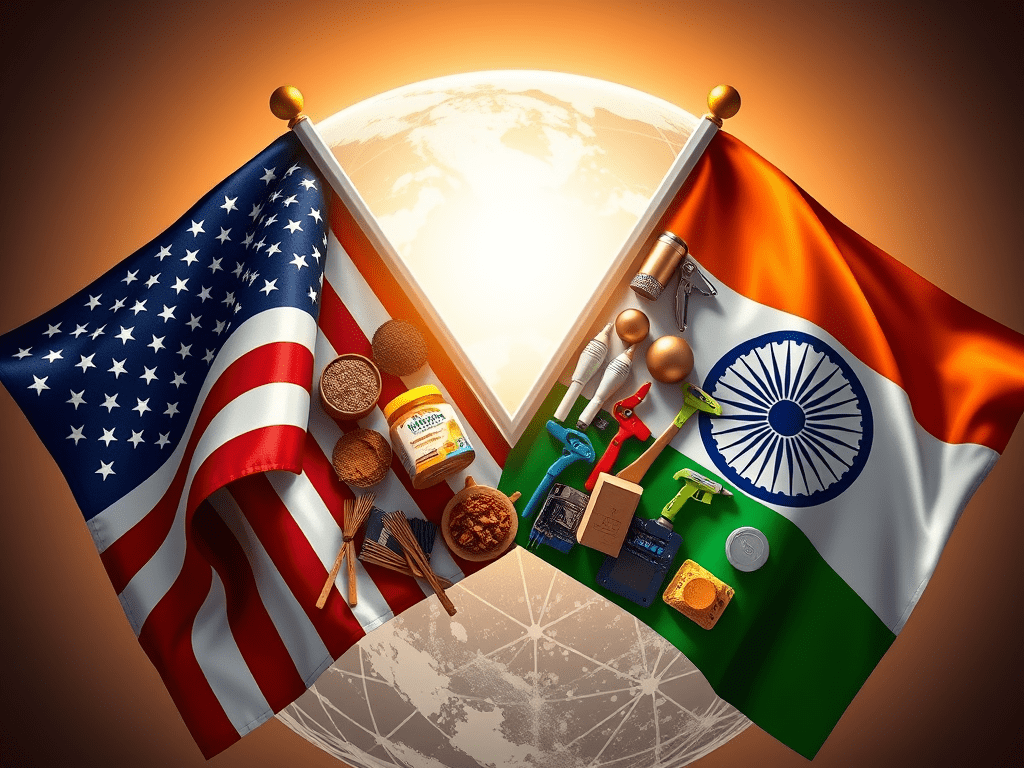
India’s exports to the U.S. play a crucial role in its economy, but potential reciprocal tariffs from the U.S. could significantly impact trade volumes. Projections indicate a decline in exports and a slight dip in GDP growth if such tariffs are implemented. Ongoing bilateral discussions may help mitigate these risks.
Key Trade Insights
| Key Aspect | Details |
|---|---|
| Exports Projection | India’s exports to the U.S. may decline by $2 billion to $7 billion in FY26 if the U.S. imposes reciprocal tariffs. |
| Recent Export Growth | In FY25, India’s exports to the U.S. grew by 5.57%, reaching approximately $59.93 billion. |
| Imports Growth | India’s imports from the U.S. increased by 1.91% during April-December FY25, totaling around $33.4 billion. |
| Trade Significance | The U.S. is India’s largest trading partner, accounting for about 18% of India’s total goods exports and over 6% of its imports. |
| Impact on GDP | Tariff imposition could lead to a GDP growth decline of 5-10 basis points from the current projection of 6.6%. |
| Tariff Differential | The average tariff differential between India and the U.S. is around 7 percentage points. |
| Bilateral Discussions | Ongoing trade negotiations and defense pacts between India and the U.S. could help mitigate potential negative impacts. |
| Monitoring Economic Conditions | The situation is being closely watched due to its significant implications for the Indian economy and international trade. |
Future Considerations
As discussions continue, India must explore strategies to protect its trade interests, including negotiating favorable terms in bilateral trade agreements and diversifying export markets. Close monitoring of economic conditions and tariff policy changes will be crucial in the coming months.




Leave a comment