
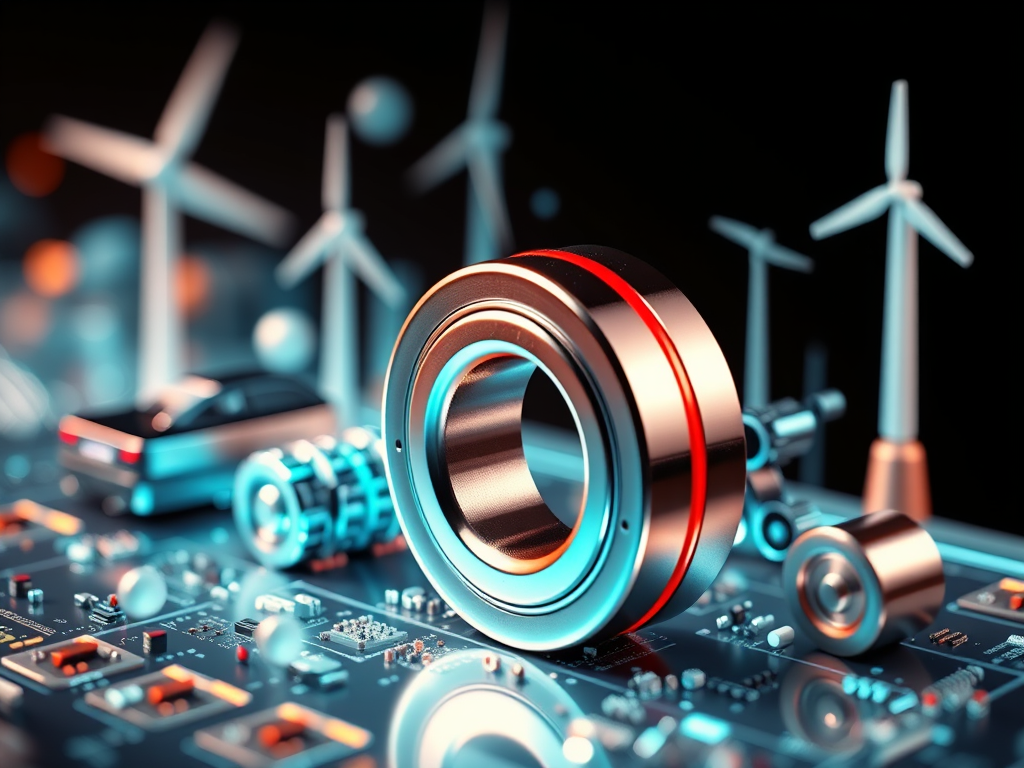
As the world transitions toward electric mobility and renewable energy, rare earth magnets have become the backbone of modern technological infrastructure. These powerful magnets—particularly neodymium-based—are critical components in electric vehicles (EVs), wind turbines, defense systems, and electronics. Amid rising geopolitical tensions and China’s dominance over global rare earth processing, India is now accelerating its domestic roadmap to become self-reliant in this crucial segment.
India’s Rare Earth Magnet Strategy: Key Highlights
India is negotiating with global and domestic players to establish long-term stockpiles and manufacturing hubs for rare earth magnets, offering fiscal incentives and policy support. This move is prompted by China’s recent export restrictions and India’s heavy reliance on Chinese supplies.
Strategic Overview of India’s Rare Earth Magnet Plan
| Key Area | Details |
|---|---|
| Objective | Reduce dependence on China for rare earth magnets and build a robust domestic ecosystem. |
| Negotiations Underway | India is in talks with companies to secure production commitments with incentive-backed support. |
| China’s Market Share | China controls ~90% of global rare earth magnet processing and exports. |
| Fiscal Support | Production-linked incentives; potential funding of the cost gap vs. Chinese imports. |
| Domestic Mining | IREL (India) Ltd. mines rare earths, primarily for defense and atomic energy sectors. |
| National Initiative | National Critical Mineral Mission focuses on strategic exploration (e.g., neodymium). |
| EV Sector Risk | EV and automotive manufacturers face raw material supply uncertainty and rising costs. |
| Tariff Considerations | Government considering tariff exemptions on machines for local magnet manufacturing. |
| Time Horizon | Supply chain establishment likely to take several years due to technical and investment needs. |
Industry and Sectoral Implications
1. Automotive and EV Industry
- Major Indian and global automakers have flagged supply risk concerns due to rare earth shortages.
- The cost differential between imported and locally-produced magnets is a barrier to scaling up production.
- EV adoption targets could be delayed without a reliable magnet supply chain.
2. Defense and Clean Energy
- Magnets are vital for guided missile systems, radar, and stealth technologies.
- Wind turbines and solar tracking systems depend on high-performance magnets for efficiency and output.
3. Manufacturing Infrastructure
- India lacks integrated processing facilities for refining and magnetizing rare earth elements.
- Equipment imports for magnet production currently attract tariffs, which the government plans to waive or reduce.
Historical Dependence on China
India’s reliance on China for rare earth magnets mirrors a global trend. According to various industry reports:
- 90% of India’s magnet supply chain is indirectly or directly linked to China.
- China’s recent export restrictions have already led to price spikes and shipment delays globally.
- Without diversification, India remains exposed to geo-economic shocks in sectors driving the fourth industrial revolution.
Policy and Roadmap Forward
India’s push for rare earth self-reliance is being spearheaded by:
- Ministry of Mines and Ministry of Heavy Industries.
- Collaborations with private players, research institutions, and state-run enterprises.
- Creation of strategic reserves and encouraging R&D into alternate materials and recycling.
Conclusion
India’s rare earth magnet strategy is a critical national initiative, not just an industrial policy. The long-term goal is to insulate key sectors from geopolitical disruptions, reduce trade imbalances, and emerge as a global supplier of advanced materials. However, success will depend on the speed of implementation, clarity of policy, and alignment across government, industry, and research bodies.
As the world rewires itself around green energy and high-tech manufacturing, rare earth magnets could become the “new oil.” India is now racing to ensure it doesn’t miss this energy-material revolution.




Leave a comment