
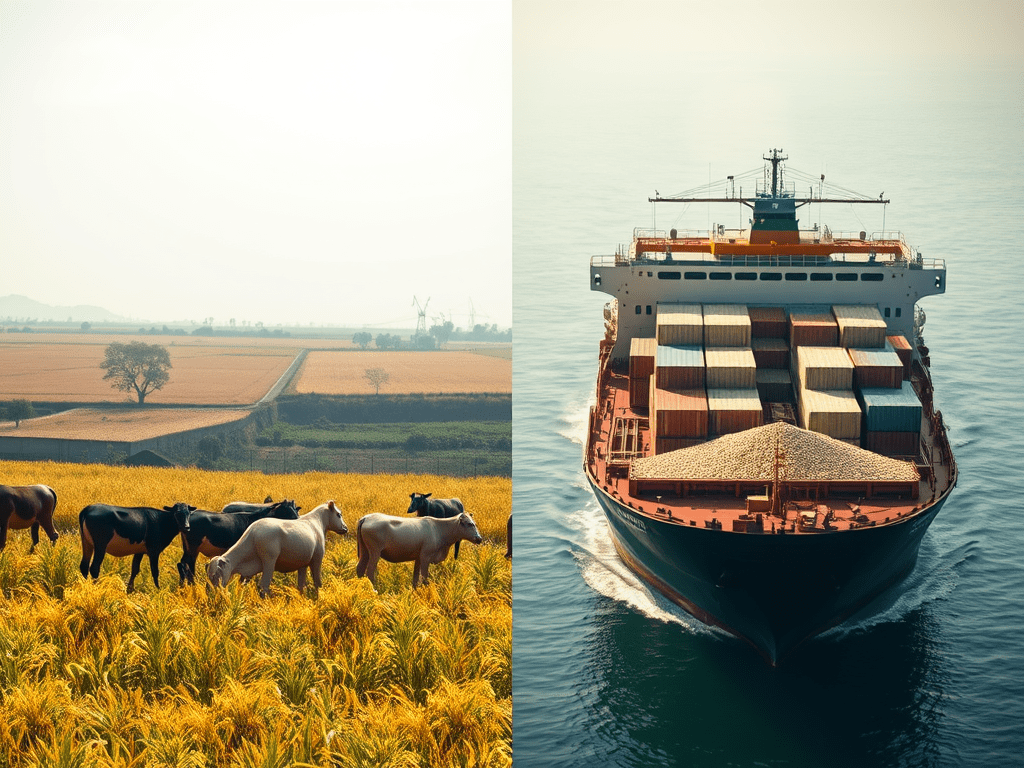
As India explores deeper trade ties with the United States, a key concern has emerged around the import of genetically modified (GM) animal feed. While such a move could benefit India’s livestock and dairy sectors in the short term, it may significantly impact the country’s agricultural exports—especially to the European Union (EU), a region known for its strict GMO-free policies.
🔍 Key Implications of GM Feed in India-US Trade Deal
| Concern Area | Details |
|---|---|
| Trade Deal Risk | Importing GM animal feed (like soybean meal, DDGS) from the US may compromise exports to the GMO-averse EU. |
| EU Sensitivities | EU markets strongly oppose GM products and may resist or ban Indian imports if GM feed is introduced. |
| Contamination Threat | India’s weak agri-logistics and lack of segregation may cause cross-contamination of non-GM exports. |
| Damage to India’s Image | Reputation as a GMO-free supplier of rice, tea, honey, spices, and organic foods may be at stake. |
| Current Indian Regulations | GM use is restricted to BT cotton and some edible oils; grains, pulses, and feed are still non-GM. |
| Public Trust | Domestic and international consumers increasingly demand GMO-free supply chains. |
| Export Market Risks | Shipment rejections, increased testing, and labeling costs may rise in the EU and other sensitive markets. |
| Strategic Importance | The trade deal must balance India’s export competitiveness with long-term sustainability and image. |
📈 India’s Agricultural Export Priorities (Post-Trade Considerations)
To maintain and expand its global agri-export footprint, India continues to emphasize quality, sustainability, and diversification.
| Priority Area | Strategic Focus |
|---|---|
| 1. Product Diversification | Rice, wheat, fruits, vegetables, spices, processed foods like pickles and jams. |
| 2. Sustainable Farming | Promote organic certification, eco-friendly practices to enter premium markets. |
| 3. Quality & Traceability | FSSAI standards, traceability tools to build international consumer confidence. |
| 4. Infrastructure Upgrade | Investments in cold chains, warehousing, and efficient transport for perishables. |
| 5. Trade Agreements | Broaden access through bilateral and multilateral pacts with emerging markets. |
| 6. Farmer Empowerment | Support cooperatives, farmer training, collective bargaining, and fair pricing. |
| 7. R&D Investment | Boost yields and resilience through tech, biotechnology, and climate-smart agri. |
| 8. Niche Product Promotion | Export of millets, herbal medicines, organic horticulture, and indigenous crops. |
| 9. Exporter Incentives | Subsidies, support schemes, and promotion councils to help exporters scale globally. |
| 10. Indian Cuisine Branding | Global marketing of Indian food to drive demand for native agri-ingredients. |
⚖️ Conclusion: Walking a Tightrope Between Progress and Preservation
India’s decision to allow GM animal feed imports under its trade agreement with the US could offer certain economic benefits but comes with high reputational and market risks, especially in Europe. As global consumers become more conscious about what they eat and how it’s produced, India’s strength as a GMO-free agri-exporter is a unique selling point that should be protected.
Negotiators must ensure that any forward step in trade cooperation doesn’t backfire on long-term agricultural goals, farmer welfare, and global market trust.



Leave a comment