
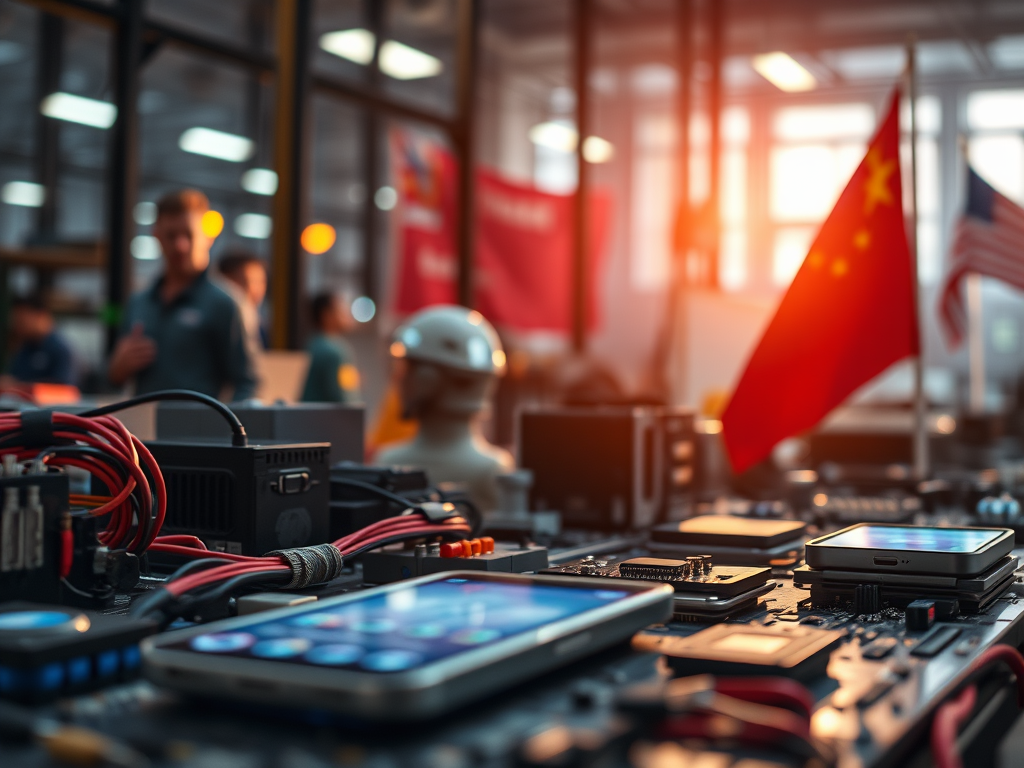
India’s fast-rising electronics industry—once a symbol of diversification away from China—is facing a new challenge. The recent softening of trade tensions between the United States and China is reshaping global electronics manufacturing and could blunt India’s export momentum.
Key Highlights from the Article
| Aspect | Key Data / Information | Implication for India |
|---|---|---|
| US–China Trade Relations | Improved diplomatic and trade engagement | Could restore China’s role as a global electronics hub, threatening India’s share of exports |
| Tariff Reductions | US halved tariffs on fentanyl from China, narrowing India’s cost advantage by ~10 percentage points | Reduces India’s price competitiveness in US markets |
| India’s Export Growth | Electronics exports to the US rose 42% in H1 FY26 over FY25 | Growth trajectory could slow if China regains market access |
| Smartphone Exports | 60% year-on-year increase, led by firms like Apple, Foxconn, and Tata Electronics | High-growth category vulnerable to renewed Chinese competition |
| Cost Disability | India’s manufacturing cost gap with China had narrowed in recent years | Tariff cuts risk widening this gap again |
| Government Support | ICEA urges continued incentives and export-friendly policies | Critical to sustain investor confidence and offset global shifts |
| Global Supply Chain Risk | Trade normalization could re-center manufacturing in China | Undermines India’s “China+1” positioning |
| Major Industry Players | Members of ICEA include Apple, Google, Foxconn, and Tata Electronics | Their global decisions could pivot depending on cost-competitiveness trends |
Implications for India’s Electronics Ecosystem
- Shrinking Cost Advantage
India’s cost competitiveness—previously supported by high US tariffs on Chinese electronics—has now narrowed. A 10-percentage-point cost edge is nearly erased, reducing the appeal of Indian exports to the US. - Export Momentum at Risk
The 42% growth in electronics exports achieved in the first half of FY26 may not sustain if China regains pricing and supply efficiency. The export mix, led by smartphones and consumer devices, is particularly exposed. - Investment Sentiment Could Cool
The Production-Linked Incentive (PLI) scheme, a major draw for global manufacturers, might lose some of its shine if export returns decline. Reduced competitiveness could slow fresh capacity investments from major players. - Possible Reversal of Supply Chain Diversification
India benefited significantly from global firms’ “China+1” strategy post-pandemic. Renewed US-China trade normalization could cause some companies to reconsider expanding Indian operations, reversing recent gains in supply chain diversification. - Category-Specific Impact
- Smartphones and components: Face stiff competition as Chinese supply chains resume efficiency.
- Consumer electronics: Price-sensitive US buyers might shift demand toward cheaper Chinese alternatives.
- Semiconductors and sub-assemblies: India’s nascent sector could struggle to attract large-scale investments.
- Long-Term Trade Positioning
If the US continues lowering tariffs to ease inflation pressures, India’s medium-term strategy should pivot toward European, African, and Latin American markets while deepening domestic value addition to cushion export shocks. - Policy Imperatives
The ICEA has urged the government to:- Sustain PLI and export rebate programs;
- Enhance component-level manufacturing incentives;
- Strengthen ease-of-doing-business initiatives to retain investor trust.
Outlook: Balancing Global Shifts with Domestic Strength
The thawing of US–China trade tensions is a test for India’s electronics ecosystem. While it underscores the fragility of export-led growth reliant on external tariff structures, it also presents an opportunity for India to double down on domestic competitiveness—through efficiency, innovation, and deeper supply-chain localization.
India’s response in the next 12–18 months—particularly in sustaining incentives, scaling production, and diversifying markets—will determine whether it remains a key node in global electronics manufacturing or yields ground back to China.




Leave a Reply