
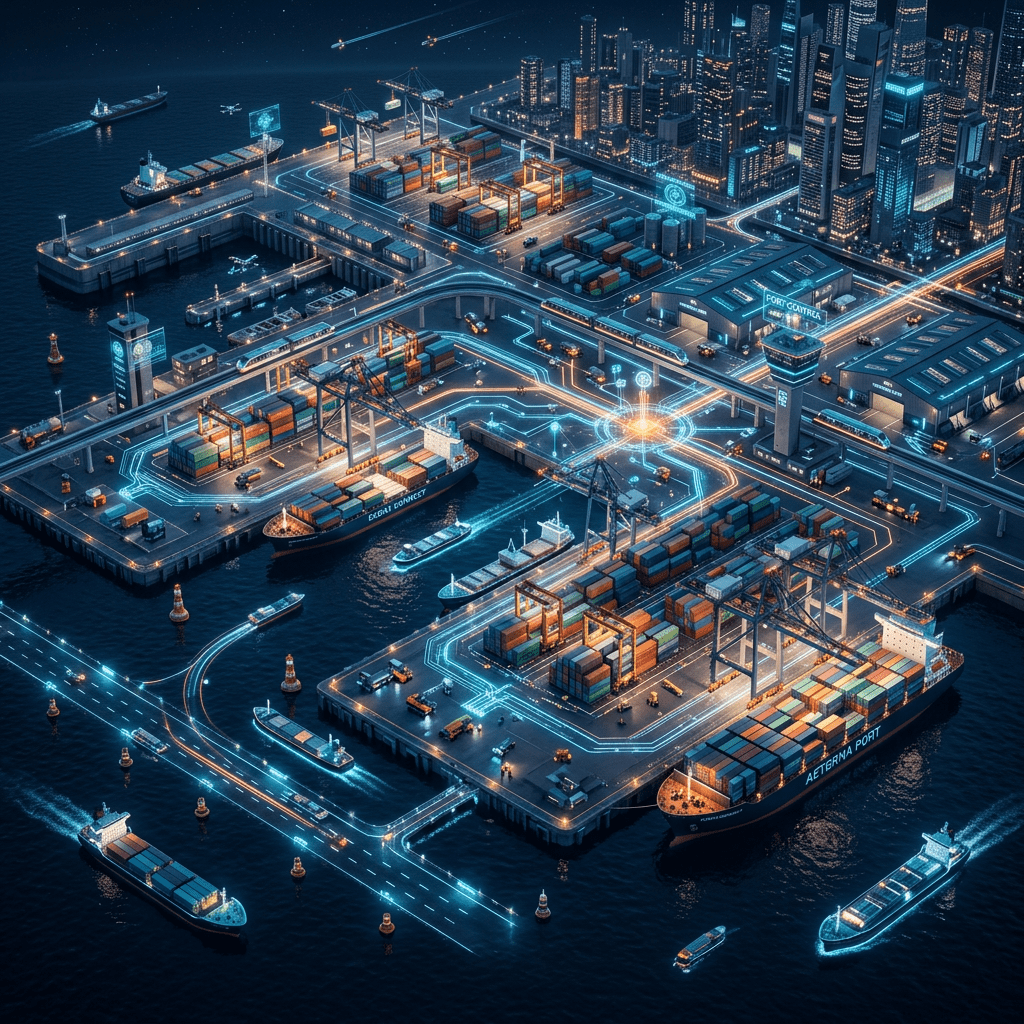
India is embarking on an ambitious journey to reshape its maritime landscape with the vision of establishing a National Container Line that ranks among the Top 10 global container shipping lines by 2047. Aligned with the country’s Viksit Bharat @2047 vision, this initiative aims to strengthen India’s maritime independence, reduce reliance on foreign shipping lines, and position the nation as a global logistics powerhouse.
The proposed strategy revolves around the consolidation of key maritime organizations, enabling better operational efficiency, integrated logistics, and a stronger global presence.
Key Highlights
| Parameter | Details |
|---|---|
| Vision | Position India’s National Container Line among the Top 10 Global Container Shipping Lines by 2047 |
| Strategic Approach | Consolidation of major maritime organizations into a unified entity |
| Organizations Involved | Shipping Corporation of India (SCI), Inland Waterways Authority of India (IWAI), Puducherry Coastal Port (PCP) |
| Growth Drivers | Digital transformation, infrastructure modernization, fleet expansion, strategic alliances, multimodal connectivity |
| Expected Benefits | Improved cargo capacity, lower logistics costs, enhanced trade competitiveness, stronger maritime security |
| National Objective | Support India’s aspiration of becoming a global manufacturing and export hub |
Why This Matters
Despite being one of the world’s fastest-growing economies and among the largest trading nations, India continues to depend heavily on foreign shipping lines for international container transportation. Developing a strong national container carrier will help improve supply chain resilience, reduce freight dependency, and strengthen India’s position in global trade.
A unified national carrier can also enable:
- Better integration between ports, inland waterways, and coastal shipping.
- Improved cargo visibility through digital technologies.
- Greater control over strategic trade routes.
- Enhanced support for Indian exporters and importers.
Key Pillars of Growth
1. Consolidation of Maritime Assets
Bringing together the strengths of SCI, IWAI, and PCP is expected to create operational synergies, optimize resources, and establish a stronger national shipping ecosystem.
2. Technology-Driven Operations
Investment in digital platforms, AI-powered planning, smart fleet management, and real-time cargo visibility will improve efficiency and customer experience.
3. Infrastructure Development
Expanding port capacity, modernizing terminals, improving inland waterways, and strengthening multimodal connectivity will form the backbone of the initiative.
4. Strategic Partnerships
Collaborations with global shipping partners, logistics providers, and technology companies will accelerate growth while expanding international reach.
Expected Impact
The successful implementation of this vision could transform India’s maritime sector by:
- Increasing India’s share in global container shipping.
- Enhancing export competitiveness.
- Reducing logistics costs.
- Strengthening supply chain resilience.
- Creating employment opportunities across the maritime ecosystem.
- Supporting India’s long-term economic growth.
Conclusion
The vision of building an Indian National Container Line that ranks among the world’s top 10 by 2047 reflects India’s growing ambition to become a major force in global logistics and maritime trade. Achieving this milestone will require sustained investment, policy support, digital innovation, and strong collaboration between government and industry.
If executed effectively, this initiative has the potential to redefine India’s role in global shipping while reinforcing its position as a leading logistics and trade hub for the future.


Leave a Reply