
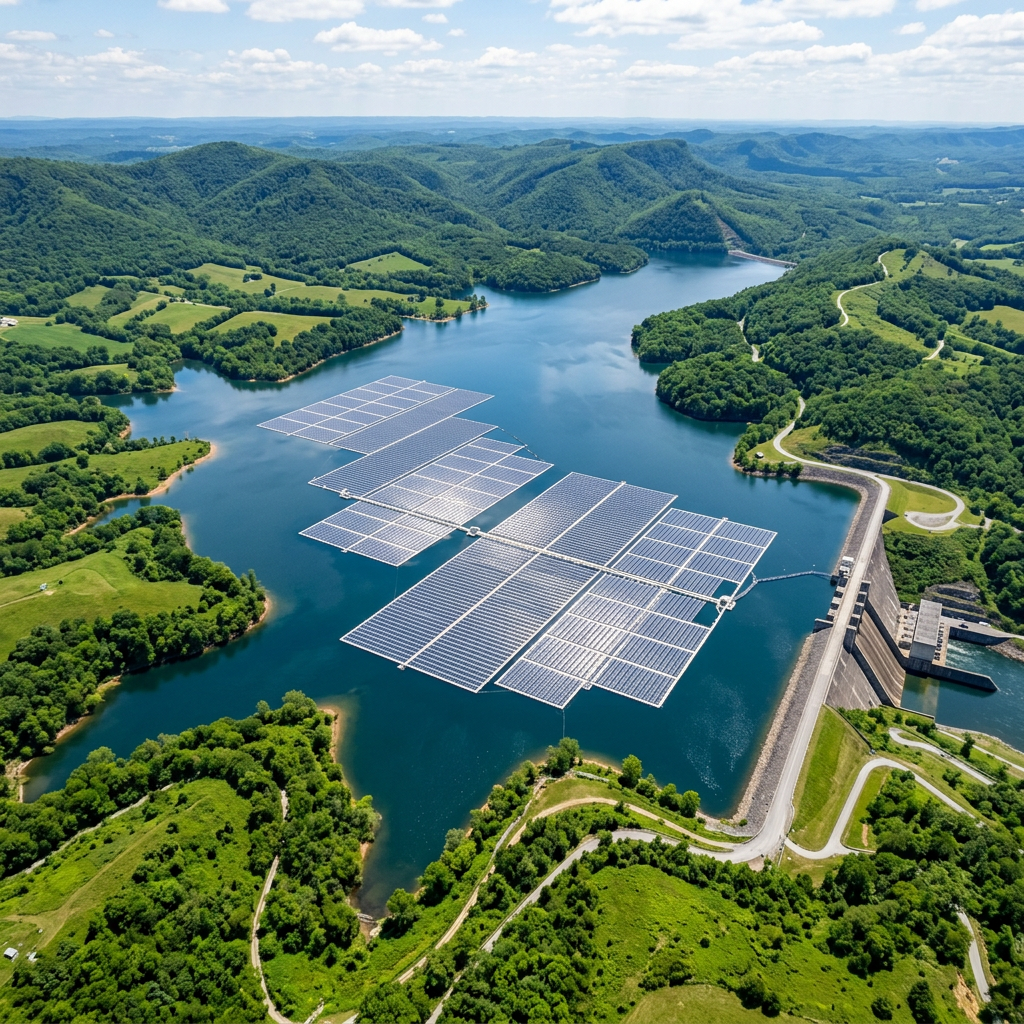
India has taken another decisive step in its renewable energy transition with the approval of the Pradhan Mantri Surya Sarovar Yojana (PM-SSY). Unlike previous solar initiatives, this scheme combines floating solar power generation with mandatory Battery Energy Storage Systems (BESS), making it one of the country’s first large-scale renewable programs designed around dispatchable clean energy rather than intermittent generation.
With an investment of ₹5,070 crore, the Government aims to utilize India’s vast reservoir network while simultaneously strengthening domestic manufacturing under the Aatmanirbhar Bharat initiative.
Executive Summary
| Parameter | Details |
|---|---|
| Scheme | Pradhan Mantri Surya Sarovar Yojana (PM-SSY) |
| Approval Date | 31 July 2026 |
| Approved By | Union Cabinet chaired by Prime Minister Narendra Modi |
| Total Government Outlay | ₹5,070 Crore |
| Target Capacity | 5,000 MW Floating Solar PV |
| Mandatory Storage | Minimum 2 Hours ESS |
| Total Storage Capacity | Minimum 10,000 MWh |
| Implementation Period | FY2026-27 to FY2030-31 |
| Financial Disbursement | Up to FY2032-33 |
Key Financial Incentives
| Incentive | Provision |
|---|---|
| Central Financial Assistance (CFA) | ₹1 Crore per MW |
| Payment Method | Post Project Commissioning |
| Feasibility Study Support | Up to ₹50 Lakh per Project |
| Eligible Studies | Bathymetry, Hydrography, Environmental Impact Assessment |
The feasibility funding is expected to reduce one of the biggest bottlenecks in floating solar projects—site investigation and engineering studies.
Why Floating Solar?
India possesses enormous untapped water resources suitable for floating solar installations.
| Metric | Value |
|---|---|
| Estimated Floating Solar Potential (NISE) | 102 GWp |
| Existing Installed Floating Solar | ~700 MW |
| PM-SSY Target | 5 GW |
| Growth Over Existing Capacity | Approximately 7 Times |
Floating solar offers several operational advantages over traditional ground-mounted installations.
| Benefit | Impact |
|---|---|
| No Land Acquisition | Faster Project Execution |
| Water Cooling Effect | Higher Panel Efficiency |
| Reduced Water Evaporation | Conservation of Reservoir Water |
| Utilization of Existing Reservoirs | Better Infrastructure Optimization |
Mandatory Energy Storage – The Biggest Differentiator
Unlike earlier solar schemes, PM-SSY mandates battery storage for every project.
| Requirement | Details |
|---|---|
| Storage Duration | Minimum 2 Hours |
| National Storage Target | 10,000 MWh |
| Technology | Co-located Battery Energy Storage System (BESS) |
| Objective | Dispatchable Renewable Energy |
This positions PM-SSY as both a renewable energy program and a grid stability initiative, addressing the intermittency challenges traditionally associated with solar power.
Expected National Benefits
| Impact Area | Estimated Benefit |
|---|---|
| Annual CO₂ Reduction | ~10 Million Tonnes |
| Employment Generation | 16,000–17,000 Jobs |
| Domestic Manufacturing | Boost for Modules, Floatation Systems & Batteries |
| Water Conservation | Reduced Reservoir Evaporation |
| Grid Reliability | Improved Through Integrated Storage |
Major Execution Challenges
Despite the ambitious vision, implementation will depend on overcoming several supply chain constraints.
| Challenge | Current Situation | Potential Impact |
|---|---|---|
| DCR Solar Modules | Domestic supply remains tight | Possible project delays |
| ALMM List-II Compliance | Mandatory for procurement | Limited supplier availability |
| Battery Manufacturing | Domestic capacity still developing | BESS procurement bottlenecks |
| Floating Solar EPC Expertise | Limited specialized contractors | Slower project execution |
| Reservoir Engineering | Complex anchoring & cabling requirements | Higher project complexity |
Supply Chain Opportunities
PM-SSY creates substantial opportunities across the logistics and industrial ecosystem.
| Sector | Opportunity |
|---|---|
| Solar Module Manufacturers | Increased DCR module demand |
| Battery Manufacturers | Large-scale BESS deployment |
| EPC Companies | Floating solar engineering |
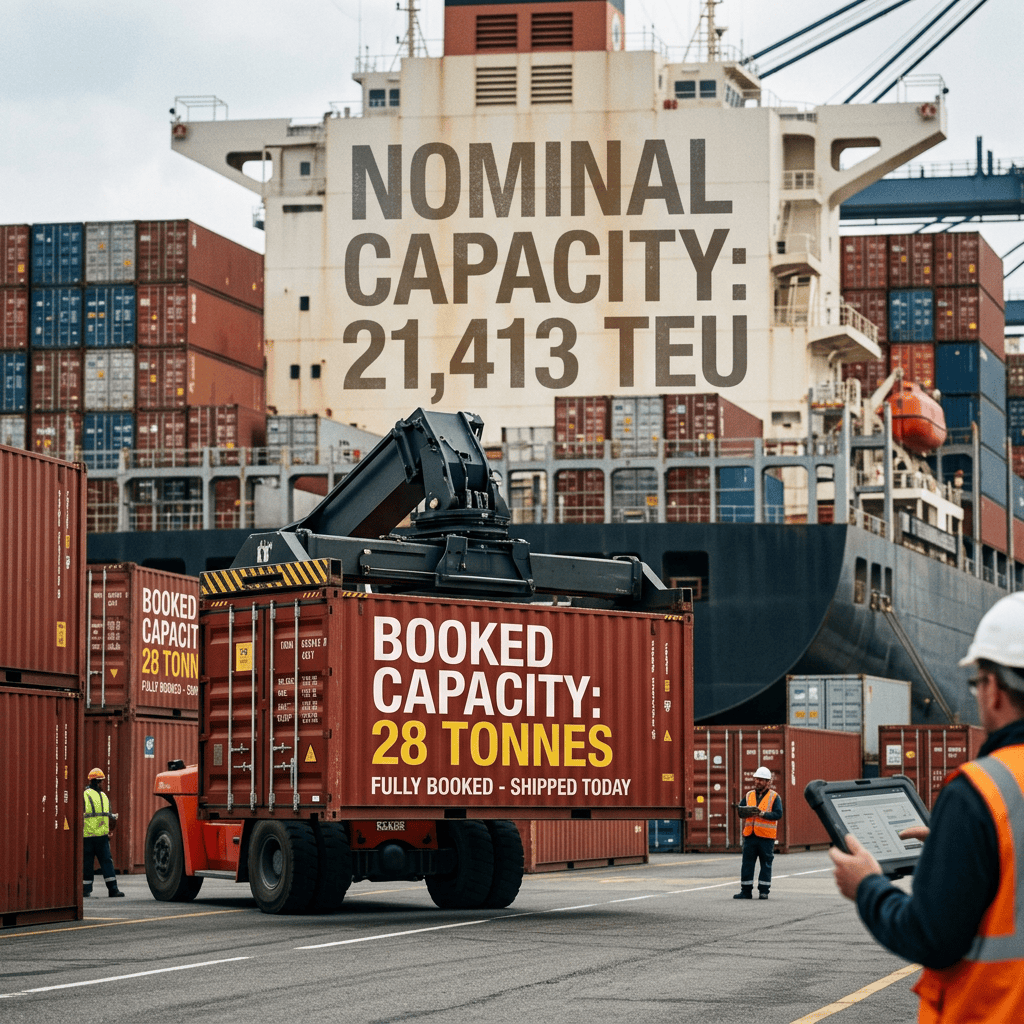
| Heavy Logistics | Transport of solar modules, pontoons, transformers, batteries |
| Ports | Import/export of renewable equipment |
| Freight Forwarders | Project cargo movement |
| Warehousing | Storage of oversized renewable components |
| Inland Transportation | Movement to remote reservoirs |
Implications for Freight Forwarders & Logistics Providers
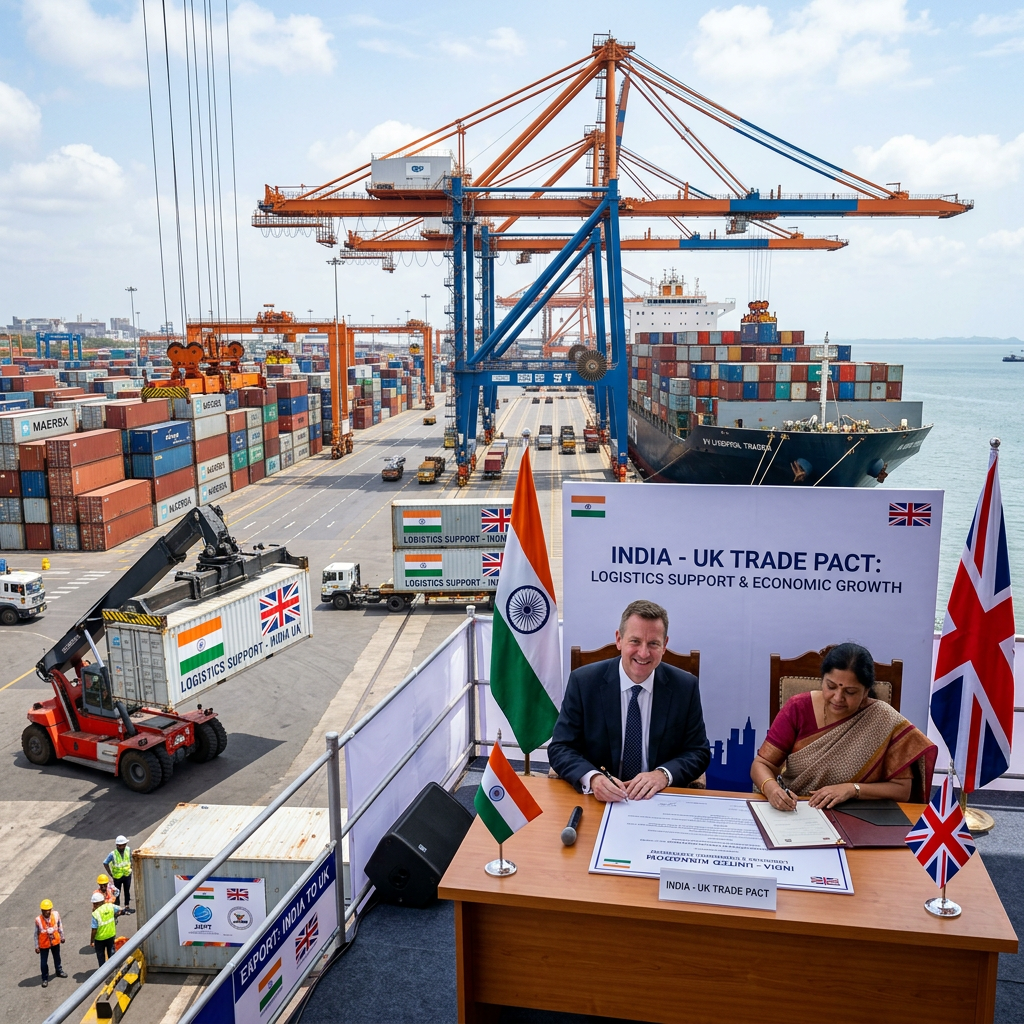
The logistics industry will play a critical role in the successful execution of PM-SSY.
| Logistics Segment | Business Impact |
|---|---|
| Project Cargo | High demand for oversized cargo movement |
| Multimodal Transport | Coordination between ports, road, and inland waterways |
| Customs Clearance | Increased import/export of renewable energy components |
| Specialized Warehousing | Storage for batteries and solar equipment |
| Last-Mile Delivery | Remote reservoir project locations |
| Battery Logistics | Handling hazardous and high-value cargo |
For freight forwarders, this initiative represents more than transportation—it requires integrated project logistics, specialized handling, regulatory compliance, and synchronized supply chain execution.
Industry Perspective
Industry stakeholders have welcomed the scheme as a structural reform rather than a short-term subsidy program. The ₹1 crore per MW Central Financial Assistance significantly improves project viability while encouraging developers to integrate solar generation, storage, and engineering capabilities into a unified project model.
Strategic Analysis
| Strengths | Challenges |
|---|---|
| Strong Government Support | Domestic Module Availability |
| Large Untapped Resource | Battery Supply Constraints |
| Integrated Storage | Skilled EPC Capacity |
| Land-Free Development | Reservoir Engineering Complexity |
| Lower Carbon Emissions | Execution Timeline |
Conclusion
The Pradhan Mantri Surya Sarovar Yojana (PM-SSY) represents a strategic evolution in India’s renewable energy policy by combining 5 GW of floating solar capacity with a mandatory 10 GWh of battery energy storage. Rather than simply expanding solar generation, the scheme focuses on delivering firm, dispatchable renewable power while making productive use of the country’s reservoirs.
For the logistics, freight forwarding, EPC, and project cargo sectors, PM-SSY is expected to generate sustained demand across the renewable energy value chain—from transporting solar modules, flotation systems, transformers, and battery containers to managing complex multimodal logistics for reservoir-based projects. Success, however, will depend on India’s ability to scale domestic DCR-compliant solar module production, expand battery manufacturing capacity, and strengthen specialized floating solar engineering capabilities.
If these supply-side challenges are addressed effectively, PM-SSY has the potential to become a landmark program that not only accelerates India’s clean energy ambitions but also establishes a new benchmark for integrated renewable infrastructure development.

 Glottis Limited
Leave a comment